Sunday, June 12, 2016

First Speculations for Transformers: The Last Knight


Looks like Optimus had a rough flight
Finally we have our first idea of what to expect from the latest Transformers movie, now known as The Last Knight.  A pair of brief 20 second videos have been released showing what appears to be Optimus Prime and Megatron.  In addition, filming has begun this week and several new cars have been spotted on site.  I was planning to offer my thoughts on the latest installment of the Transformers film franchise, as well as what I was hoping to see.  Now seems as good a time as any, so let's get started.

I will admit that I generally like the Transformers movies.  The first one was a lot of fun, Revenge of the Fallen is passable, and Dark of the Moon is hindered only by the convoluted Sentinel Prime plot twist.  I will be going into The Last Knight on a sour note, as Age of Extinction was my least favorite movie.  It could have been good, but there are numerous problems.  The tone is way too somber, the product placement is annoying, the story makes no sense, and there are so many filming errors that it's hard to take this film seriously.  I still have yet to buy it on DVD, and probably won't unless The Last Knight blows my mind and I need Age of Extinction to fill in the story. 

As we know, Age of Extinction ended with Optimus Prime flying into space in search of his creators.  From the looks of this image, the trip didn't go too well.  Optimus's face is all faded and dirty.  I'm curious about the red on his left cheek, since he didn't have any red markings on his face when he left.  The most interesting aspect of this image is his eyes.  Instead of their usual blue, Optimus's eyes are purple.  The last time I saw a transformer with purple eyes was Megatron in the Transformers: Prime TV series.  Megatron was under the influence of dark energon at the time.  Dark energon is said to be the emanation of Unicron and can be used to increase one's power, revive the dead, and corrupt Transformers. 

Speaking of Megatron, his image also shows him with purple tinged eyes and a red stain on his face.  I'm still not sure if this is indeed Megatron, because Megatron became Galvatron in Age of Extinction.  Also, this looks nothing like any previous depiction of Megatron.  There will be some heavy duty explaining to do if Megatron returns and changes his appearance so comprehensively.  Although Michael Bay insists that this is Megatron, I am going to assume that this is misinformation and will continue my speculation as if Megatron's conscience remains in Galvatron.

It is possible that somehow, Megatron is able to extract his conscience from Galvatron's body, but I would hope that the writers don't go for something as crazy as that.  Ideally, The Last Knight should focus primarily on Optimus Prime's search for his creators.  A story about Optimus Prime travelling the universe would be quite entertaining.  He could encounter all kinds of alien species and have a Star Wars style adventure.  For that matter, he could meet other characters from the Transformers universe who have yet to make an appearance on screen.  Imagine if Optimus found Ultra Magnus as an obedient slave for the creators and is able to show him a greater calling as an Autobot.   

The Transformers still on Earth may go back to working for the government.  However, I find it more plausible that after everything from the last movie, they would just like to be left alone.  Bumblebee and the other Autobots could become the guardians of the Yeager family, as Optimus instructed.  They may be drawn into conflict as Galvatron, who survived the battle of Hong Kong, rallies all remaining Decepticons on Earth in a bid for revenge.  He would likely chase down the humans and Autobots until a final encounter where Optimus arrives with reinforcements from the creators' homeworld to drive off Galvatron.

The details can change and some character subplots could be introduced to spice things up, but I feel this is a logical story based on the events of the last film.  But, if I have learned anything, it's that the logical route is rarely followed in these films.  We'll probably end up with yet another poorly written, explosion-filled, product-saturated headache.  Only time will tell.  Until then, I anxiously await confirmation on new Transformers and will pour over all the new vehicles as more information becomes available.        

Sunday, May 29, 2016

Redline Review

Hello readers.  Sorry for the delay in new posts.  I've had a lot going on this month such as moving to a new house and starting a new full time job.  I haven't had much time to sit and write in a while, but now that things are settling down, I'm going to get this blog up and running again.  Thank you very much for your patience.


Today, I am going to review one of my favorite anime movies: RedlineRedline is about a type of racing that sort of combines the idea of Speed Racer with a dash of Podracing from Star Wars.  Racers from across the universe dream of competing in Redline, the most dangerous race of all.  Anything goes at Redline, and racers are lucky to survive.  Here we find our protagonist, Sweet JP.  JP is a highly skilled, yet goodhearted racer.  He doesn't approve of high tech weapons on his car, instead relying on his natural talents as a racer and a few caps of nitro to get the most out of his TransAm 20000.  JP almost wins the Yellowline preliminary race, but sabotage from his best friend and mechanic, Frisbee, costs him the victory.

Frisbee and JP are in up to their necks with the mob, and have been involved in various race fixing schemes.  Money from the mob pays for JP's bail bond funds.  Following Yellowline, JP is wondering what to do next when word come out that two racers decide to drop out of Redline, and fans vote JP into the race.  This time around, Redline will be held on Roboworld.  However, Roboworld's president vows to destroy the racers by any means necessary.  Not only do the leaders of Roboworld despise racing culture, the high levels of media coverage will likely expose Roboworld's illegal weapons buildup.  JP is ready to give the race his all, and hopes to get on better terms with fellow competitor and Yellowline winner, Sonoshee McLaren. 

The strength of Redline rests in the characterization of JP and Sonoshee.  Each of them embodies stereotypical racer tropes.  JP is the easygoing nice guy with a questionable past.  He allowed himself to be arrested so that Frisbee wouldn't get into any more trouble.  And Sonoshee is the strong willed independent female out to prove herself to all the boys.  As formulaic as their budding romantic relationship is, it works because the writers don't make it the sole focus of the story.  In addition, viewers get brief bios of the other racers, which range from satirical, to clichéd, to downright comedic.  Other plotlines involve Frisbee coming to terms with his involvement with the mob, and Roboworld's efforts to destroy all the racers. 

Redline is also a technical and artistic masterpiece of a film.  It was the first time I had been exposed to the work of Madhouse, and I have been impressed with everything I have seen from them since.  Every single frame is hand drawn, and it took the people involved in making this film seven years to finish.  I can only imagine how painstaking it was to render all 100,000 frames.  Fortunately, the result is completely worth it.       

I never saw the 2008 Speed Racer live action movie, but I feel like this is what that movie should have been.  The racing action is balanced by well developed lead characters, excellent humor, and an engaging story.  Racing anime tend to sit between a spectrum bookended by the fun, but campy, Speed Racer on one end, and realistic and overly technical Initial D at the other.  Redline rests just off center towards the Speed Racer end, but is able to keep audiences glued despite getting over the top ridiculous at times.  It's one fast ride of a movie, but audiences are going to enjoy every minute.  

Thursday, April 21, 2016

Crisis at Fiat-Chrysler


Recently I read an article on Car and Driver about how Fiat-Chrysler CEO Sergio Marchionne is questioning the profitability of Tesla's new Model 3 sedan.  To this I say, Marchionne should worry about his own company's health before offering his two cents on others.  This is just the most recent in a line of news articles that have me really questioning if Fiat-Chrysler is going to survive the long run.  It seems to me that the company has become a house of cards just waiting for the right catastrophe to topple it over for good.


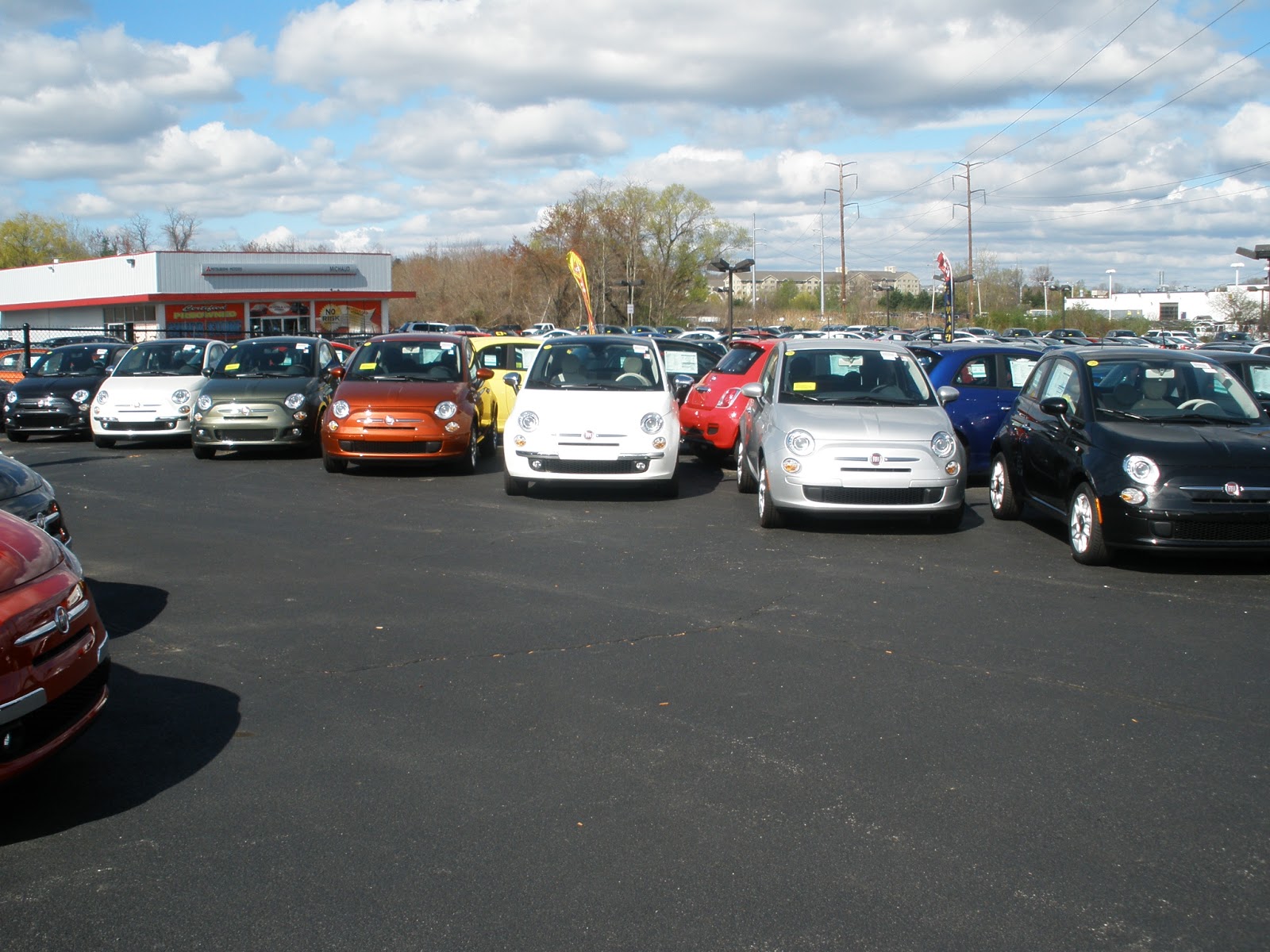
Fiat's return to the US has been less than successful,
with dealers struggling to sell inventory
Looking through monthly sales numbers led to my initial concern.  Jeep and Ram post healthy gains month to month.  This makes sense considering people's ravenous appetite for SUVs, trucks, and crossovers.  For 2015, 39 percent of all new cars that left Fiat-Chrysler showrooms were Jeeps.  However, it must also be noted that Dodge, Chrysler, and Fiat, in the same articles, usually post double digit declines month to month.  For the most part, Dodge, Chrysler, and Fiat don’t offer light trucks.  Exceptions include the Dodge Durango, which is kind of a niche product as the only remaining rear drive, V8 powered, three-row midsize SUV; and the Dodge Journey, which is mediocre in all criteria.  I'm surprised the Fiat 500X hasn't been a bigger sales success.  Its sister car, the Jeep Renegade, is selling like crazy.  Fiat desperately needed this car to ride the wave of sub compact crossover sales, but I'm guessing poor reliability and lack of dealership visibility have hurt sales potential.  Fiat has only 206 showrooms in the US, which is about the same number of Chrysler showrooms in New York and California alone.


For 2016, all five Fiat-Chrysler brands are in the bottom seven Consumer Reports new car predicted reliability positions.  Chrysler's nine speed automatic transmission has been a source of constant headaches, and don't forget the public hacking of a Jeep Cherokee through its infotainment system which led to a recall of 1.4 million Chrysler cars to fix the vulnerability.  Reliability has never been Chrysler's strong suit, and their shoddy reputation is turning away potential new buyers looking for a trouble free motoring experience. 


This leads to the next part of my concern.  I have addressed the past and the present, and now must look to the future.  Here is where I develop serious doubt as to Sergio Marchionne's leadership skills.  It was announced in January that the Dodge Dart and the Chrysler 200 would not be renewed for a second generation.  Instead, Marchionne is going to increase production of  Jeep and Ram vehicles, citing low gas prices as a permanent condition.  My first reaction to this was something along the lines of, "What an idiot."  Gas prices will go up eventually, and Fiat-Chrysler will be up a creek when they do.  Midsize and compact sedans are crucial to any mainstream automaker's lineup to keep fleet fuel economy high.  Even if gas prices stay low, the government will continue to pass increasingly stricter fuel economy regulations.


Once the next big thing, the Dodge Dart will
not be renewed for a second generation
The Dart was released to great fanfare in 2012 as a breakthrough for Dodge.  It was the same story with the 200 in 2014.  That car was supposed to end the nightmare that was the Sebring.  But, as Marchionne states, the Dart's and the 200's disappearance will not significantly hurt Chrysler's profits, which indicates that they can't be selling that many or making a profit off of those they do sell.  Nevertheless, announcing a car is to be discontinued while it's still got a few years left in production could really hurt consumer confidence and stifle whatever sales potential the cars have left.


I could ramble on forever about Marchionne's crazy schemes.  He expects Alfa Romeo to be selling 400,000 vehicles globally in 2020.  Alfa could launch an entire lineup tomorrow and it will still take years to reach those kinds of numbers, if they ever reach them at all.  The brand is positioning itself as an Italian alternative to Audi, and it took Audi the better part of a decade to shed its old image as a purveyor of slightly nicer Volkswagens to that of a legitimate luxury car maker in its own right.  Considering Alfa Romeo is starting from scratch, with a history of notorious reliability behind it, Marchionne's statements are hopelessly optimistic.  Marchionne also keeps looking for business partners; in particular he is constantly courting General Motors CEO Mary Barra about a merger.  Smartly, she isn't biting.  If Marchionne had confidence in his own business, he wouldn't keep asking others to join him.  Furthermore, Fiat-Chrysler has nothing valuable to offer GM.  GM has made tremendous progress following its bankruptcy.  There is no need for them to stoop back down to Chrysler's level.


A big part of GM's resurgence has to do with a significantly improved product lineup.  Chrysler's lineup is mostly the same since before its partnership with Fiat, and the company has remained quiet on the future of several key models.  The Dodge Charger, Chrysler 300, and Dodge Challenger desperately need a top to bottom update, and the current Durango should be nearing the end of its product cycle.  However, no test mules have been spotted and no announcements have been given regarding replacements.  There's still time, and I would expect there to be some announcement by the end of this year about some unveilings at the 2017 Detroit Auto Show.


So, all in all, things look pretty gloomy for Fiat-Chrysler.  A dearth of competitive products, poor reliability, and corporate mismanagement are appearing to stifle the group.  Then again, for Chrysler, that might just be business as usual.

Thursday, March 24, 2016

One-Punch Man Review

Genos (left) and Saitama
Superheroes, they are not overused.  Just kidding.  They are terribly overused.  The superhero genre is one of the most saturated in the market.  The biggest culprits would be Marvel and DC Comics for churning out countless blockbusters nearly every other month, and don't get me started on their myriad television series.  This isn't to say their stuff is terrible.  It's just that superheroes are the easiest way to milk money from your audience.  They take little thought to create, and sometimes make up for lackluster storylines with state of the art special effects.  It takes something really unique to break through the fog that superhero media creates, and thankfully, there is just such a thing in the form of One-Punch Man.

One-Punch Man follows a man named Saitama, who always dreamed about becoming a hero.  After defeating a monster one day, he trained constantly for three years until he obtained the strength of a god.  The series follows Saitama as he searches for opponents whom he can defeat in more than a single punch, while looking for some recognition of his heroic actions.  It's a fairly interesting premise.  Of course, this also puts the show at a disadvantage.  If Saitama is invincible, there is little at stake in any of the fights.  Thankfully, there is more to the show that keeps viewers interested.  Chief among which are its rich cast of characters and its insightful look into the business of being a superhero. 


For a genre that has its share of creative bankruptcy, One-Punch Man does introduce a number of characters over the course of the series.  In addition to Saitama, the second main character is a cyborg named Genos.  He is younger than Saitama, and whereas Saitama has grown bored with his life, Genos is a hotshot young gun ready to make his mark on the world.  Genos was once a normal human, but became a cyborg after another cyborg killed his family.  Vowing revenge, Genos scours the land for foes he can test his strength against so that he will be ready when he confronts his nemesis again.  Unfortunately, Genos meets his match in Mosquito Girl, who makes short work of him.  Luckily, Saitama arrives and easily defeats Mosquito Girl.  Genos then pledges himself as Saitama's apprentice hoping to learn how to become just as powerful.  Other interesting villains appear over the course of the series, as do several heroes from the Hero Association. 


As seems to be the norm for superhero material nowadays, regulation of heroes makes its presence known in One-Punch Man.  The Hero Association was created by a multi millionaire in order to fight against crime, monsters, and other threats.  Both Saitama and Genos enroll in the Hero Association in order to gain more recognition as heroes.  The Hero Association presents what might be the most interesting aspect of the series.  The Association manages all registered heroes through a meritocracy.  It uses a class system to rank heroes from S to C based on their skill and by their number of heroic deeds.  This puts heroes not just in competition against evil, but in constant competition with each other to advance in rank, especially as you look further down the rankings.  C- Class heroes need to meet a weekly quota for heroic deeds, or else be expelled from the Association, whereas high ranking heroes can sit around as they please, only getting involved if they feel it is worth the risk and reward.  Meanwhile they encourage lower class heroes to work harder in order to climb up the rankings.  It's pure capitalist rhetoric, but it makes sense.  When we do see higher ranked heroes in action, there is little doubt left as to how powerful they are.  They probably had to work hard to get where they are, too, and are likely only repeating what they were told themselves. 


Fortunately, not all heroes only care about fame.  Some heroes do enjoy helping people.  The best example of this would be Mumen Rider.  He is the top ranked C- Class hero, and is always riding his bicycle to a conflict.  He doesn't have much for strength, but his willingness to constantly put his life on the line against overwhelming odds is to be commended.  During the final episode, Mumen Rider along with some other lower class heroes aid in the evacuation of civilians while Saitama and the S-Class heroes fight off an alien invasion.  There are many different ways to be a hero, even though some might be less glamorous than others.  That, and the show's message about the purity of motives are One-Punch Man's greatest strengths.  Heroes and villains ponder over why Saitama is as strong as he is.  The answer stems from Saitama's dedication to training himself and his sincere desire to help people.


The animation for One-Punch Man is superb.  Fights are expertly choreographed and are carried out with savage ferocity.  Every character has a unique design that serves to either compliment or contradict their personalities.  One shortcoming of the series I can think of is that civilians tend to be forgotten amid the action scenes.  Although there is massive destruction throughout the episodes and it is implied that there is often great loss of life, its hard to appreciate the gravity of the situation.  It's like this is several other superhero stories, so I can give One-Punch Man a pass in this regard.  It appears that some newer films such as Batman v Superman and Captain America: Civil War are going to address civilian casualties to some degree, which is good.  The actions of heroes and villains alike have consequences on everyday folks, and it appears that writers sometimes overlook that as they design over the top action scenes. 


I highly recommend One-Punch Man for anyone who is a fan of superheroes and is looking for something extremely funny and surprisingly thought provoking.  The superhero genre needs something new to balance out the sheer volume of products.  The 12 episodes shown leave a lot of questions unanswered and character development to be explored.  I excitedly await any future seasons of One-Punch Man to be produced.

Friday, March 4, 2016

We Need More TRD

Following Toyota's admirable showing in this year's Daytona 500, I am left pondering a topic that comes to my head from time to time, that being why Toyota doesn't use its NASCAR success to bolster its lineup of passenger cars.


In the past, manufacturers often used the slogan, "race on Sunday, sell on Monday," as a way to describe race cars that were very much akin to their road going counterparts.  That has changed in recent years as NASCAR instead now uses purpose built machines decorated with an assortment of graphics to help them better resemble street cars.  Improvements were made in 2013 with the current generation car, as manufacturers have been allowed to add creases to the bodywork in the same places as on their road cars.  They look good, but I am talking about taking bigger steps than that.  I want to see some of the manufacturer's motorsports technology trickle down into cars that average people can buy.


Of the three manufacturers involved in NASCAR, Chevrolet comes closest to bridging the gap between the race track and the street.  Both the SS race car and street car are powered by V8 engines and are rear wheel drive.  Neither the Toyota Camry nor the Ford Fusion are available with rear wheel drive or eight cylinder powerplants.  The Camry offers a V6 as its largest engine, and Ford is returning to the six cylinder group for 2017 after a four year hiatus with a monster 325 hp twin turbo unit.


Ford has been making significant steps to improving the connection between its road and motorsports programs beginning over a year ago with the introduction of the new Ford Performance brand.  Ford Performance unifies the Ford Special Vehicles Team, Team RS, and Ford Racing under one banner.  It plans to offer 12 new vehicles by 2020.  We already have some, including the Fiesta ST, the Focus ST and Focus RS, and the Mustang Shelby GT350.  Upcoming vehicles are the F-150 Raptor and the GT supercar.  Ford is serious about giving its street cars a performance boost, something Chevrolet did a few years back when it built Super Sport versions of almost all its mainline cars and trucks, one of which I'm fortunate to own.  Chevrolet still offers some performance cars such as the Camaro, the Corvette, and the SS itself.  Toyota has some off road focused Tundras and Tacomas, but that's about it.


This is a shame since Toyota Racing Development has proven motorsports success.  Besides NASCAR, Toyota teams compete in the World Endurance Championship, Super GT, and NHRA, and have competed in the past in rallying events and Formula 1.  TRD does offer a number of performance parts, but most of them are for Toyota trucks.  Next to nothing is offered for the Yaris, Camry, or Corolla.  Many parts are offered for Scion cars, however, so it is likely that they will carry over when Toyota absorbs Scion's models.  It's a good start, but there is so much more room to increase TRD's presence across Toyota's lineup.  Diehard Denny Hamlin fans would be proud to drive their Camrys on race weekend if the cars they use to transport their family and groceries were engineered with similar technology that's used successfully on the track.

Saturday, February 27, 2016

Celebrating Pokemon Day and Where the Franchise Will Go Next

Happy Pokémon Day everybody!  To help celebrate Pokémon's 20th anniversary, Nintendo released a minute long advertisement during the Super Bowl earlier this month.  Unfortunately, the commercial didn't reveal much about upcoming products, but it does leave viewers with something to think about regarding how the Pokémon franchise might evolve over the next 20 years. 


The commercial begins with a young boy approaching a crowd who is apparently watching a Pokémon battle.  We see the glimpse of a wing and a flamethrower attack through the surrounding audience.  The boy, clearly inspired, whispers out loud, "I can do that," and begins training.  Footage of the boy running along a mountain is seen on television by a girl who afterwards says to herself, "I can do that."  She then goes on to win a series of chess games.  An internet video of the girl is seen by a football player.  He later gives an inspirational speech to his team, ending with a battle cry of, "We can do this!"  A news reel of the football player is seen by a young Japanese man who also says, "I can do that."  He then enters an arena that is shown to be a Pokémon battle field.  After seeing his opponent's Charizard, Gyarados, Magneton, and Mega Lucario, he throws out a Poké Ball of his own.  Before we can see what Pokémon he chooses, the image cuts to a father and son watching the match from home with their Pikachu.  The father whispers to his son, "You can do that," and the final shot lingers on the son's wide eyes before transitioning to the Pokémon 20th anniversary logo. 


It is the end of the commercial that raises the most interesting possibilities.  I think the idea of live action Pokémon is fantastic.  It would be a great direction for the franchise that would really shake things up.  Does Pokémon have the courage to do something like that?  Probably not, but they have taken small steps outside of their comfort zone before. 


I'll close by giving my thoughts about the final scene of the commercial, that being the father and son watching the Pokémon battle on TV.  I know I am not the only one who thinks that the father is meant to be Ash Ketchum.  For one thing, the man has dark hair, like Ash.  He is also wearing a blue shirt.  Blue has been a traditional color of Ash's outfits every season.  The boy sitting next to him looks almost exactly how I would imagine a real Ash Ketchum to look, especially with his dark, messy hair.  The Pikachu next to them is pretty much the final confirmation of this theory.  I know that the Pokémon anime is really pushing Ash and Serena's relationship.  This commercial would appear to be a look into the future of their family, with Ash getting their son ready to be a Pokémon trainer someday.


That being said, this is my challenge for Pokémon moving forward: After Generation Six concludes with Ash winning the Kalos league, he will start a serious relationship with Serena.  Several years later, they will have one or more children who are interested in becoming Pokémon trainers.  I would like Pokémon to make a movie or TV series following those children on their journey, while their parents provide wisdom and encouragement to help them along. 


The Pokémon franchise is now twenty years old.  An entire generation grew up with Pokémon, and is now of the age where they would be looking to have children of their own.  What better way to keep Pokémon in the family than to have a series that shows an older generation help a new one feel the rush that Pokémon brought to them many years ago.

Wednesday, February 3, 2016

Remembering Scion

A selection of Scions at the 2009 Boston Auto Show
I remember when I saw my first Scion on the road.  The model in question was an xB, and my initial reaction was something along the lines of, "What on earth is that?"  A boxy car was not a complete revelation at the time.  In 2003, Honda was also selling its Element small SUV; but this car took the straight edged two-box concept to a new level.  My first close look at one revealed this new mystery car to be a Scion, a name I had never heard before.  Some research on my part revealed that this was an entirely new brand created by Toyota in an effort to appeal to a younger demographic.


Today I learned that as of August 2016, the Scion brand will cease to operate.  All existing and upcoming products will be folded into the Toyota lineup.  Scion's demise was predicted by many pundits in the automotive industry, citing slumping sales and middling products, but the official announcement still comes as a shock.


The business plan for Scion was shrewd.  Scion dealers promised a haggle-free buying process for budget minded young car purchasers.  Many models were offered in one specification with a wide variety of aftermarket accessories available for those looking to personalize their car.  At first, the brand was successful.  Scion customers were indeed younger than average.  Even today, the average age of a Scion buyer is 36.  The tC coupe average buyer age is 29, and half of iA sedan and iM hatchback buyers are under 35. 


Toyota North America CEO Jim Lentz looks at the whole situation positively.  "This isn't a step backward for Scion, it's a leap forward for Toyota.  I was there when we established Scion and our goal was to make Toyota and our dealers stronger by learning how to better attract and engage young customers.  I'm very proud because that's exactly what we have accomplished."


Lentz has a point.  Scion, for its part, made Toyota relevant again.  Over 70 percent of Scion customers were new to the Toyota family.  At the time of the Scion's introduction, Toyota was a dowdy purveyor of soulless appliances.  The Supra was a distant memory, and the Celica and MR2 Spyder were on their way out.  In recent years, however, Toyota has given its cars sportier appearances with the J-Playful design language, and invested heavily in marketing cars like the Yaris and Corolla to younger audiences.  Bob Carter, senior vice president of operations for Toyota Motor Sales told Automotive News today that the time was right to close Scion.  "Today, youth buyers are in a completely different position than they were 13 years ago."  He acknowledges that Toyota has now become an aspirational brand for many, meaning that the reason for Scion to exist doesn't apply anymore.


The consolidation of Scion will have little impact from a consumer standpoint.  The iA, iM, and FR-S will wear Toyota badges for the 2017 model year, and the tC was on the chopping block after 2016 anyway.  The upcoming C-HR compact crossover will be sold as a Toyota, too.  What will be interesting to see is whether the model names themselves will change as well.  The iM is badged as a Toyota Auris in overseas markets, and the FR-S is also known as the Toyota GT86.  People could probably care less about the Auris, but I'm sure the prospect of the return of the legendary 86 name will have a good number of fanboys squealing.