This blog post is going to cover a variety of topics, including cars, cards, and something else. What I am going to do is share my thoughts on what it means to ascribe value to something. How much is something truly worth? Can the monetary value of something completely encapsulate its real value?
The thing that got me thinking about all this was a Lego magazine I received in the mail. In addition to cars, cards, and cartoons, I am a big Lego fan. The Star Wars line is undoubtedly my favorite. When I was younger I enjoyed reenacting scenes from the movies and coming up with my own stories. For example, what if the Empire decided to conquer the Throwbots? Would the Insectoids align with the Separatists? I used to play Legos with my sister, who has a lot of Harry Potter sets. I would send my AT-ST to attack her Hogwarts, and things like that.
I haven't bought a Lego Star Wars set for some time now. Part of the reason is that the sets and the figures have become so intricately detailed, they would clash horribly with the sets I already have. The other reason is because Lego sets have become so darn expensive. The magazine I just got features an X-Wing Starfighter for $79.99. I have the original 1999 X-Wing, which retailed for only $30. True, my X-Wing looks pretty flimsy compared to the new one, but it still gets the job done.
I know that Lego bleats continuously that they strive to maintain a 10 cent price per part ratio for all their products, and have been doing so even for the older sets. I guess that makes sense on some level, but at the same time I can't help thinking that the finished product should have some factor in determining the value of the set. For example, one of my most prized Lego Star Wars sets is the Ultimate Space Battle set #7283. It includes a total of five ships and retailed for a price of $50 back in 2005. I don't think Lego is capable of making something like that today. To build the modern equivalent of this set, you would have to spend at least twice that.
Today the Ultimate Space Battle sells online for around $300. For the amount of enjoyment I got from it, I would go so far to call it a bargain in its day. I truly feel sorry for kids nowadays. I couldn't possibly buy all my Lego sets again if I had to. My birthday and Christmas lists would have to be nickel and dimed to make sure everything on it is worth it.
The same value argument applies for cars. Spending more money on a car used to mean that you were getting convenience and luxury items unavailable in cheaper cars. August 2016 average car transaction prices were at a record high as consumers chose larger vehicles with more safety and convenience features. However, there are still some cars whose lists of standard equipment have some glaring shortcomings considering the price. In a comparison test between a $46,000 Chevrolet Camaro and a $81,000 BMW M4, Motor Trend concluded that the Camaro is not only a performance equal to the M4, it trumps the BMW in features and amenities. The Camaro came equipped with features such as a backup camera, heated seats, and satellite radio. To add those options on the BMW would lift its MSRP even higher.
A new Audi A8 which starts at around $81,000 doesn't have a single USB port. My mom's $15,000 Honda Fit has a USB port. Another example of not getting what you pay for is the Rolls-Royce Dawn. One model tested by Car and Driver lacked onboard WiFi and Apple CarPlay capabilities. I understand that not everyone needs WiFi wherever they go, but you would think something like that would be standard equipment for a car that costs over $400,000.
At the end of the day, an object's value is determined more by how much it means to you than it does the monetary number assigned to it. Whether it be a car, a trading card, or a toy, your connection to the object can overcome the number following the dollar sign attached to it. Big purchases should not be taken lightly, and people should not assume that just because something is more expensive means it is that much better. The feel good factor you receive from the object of your desire goes a long way in determining your long term satisfaction with owning it.

Saturday, September 10, 2016

Wednesday, August 3, 2016
The End of the Ute

The history of the ute dates back to 1932, when a wife of a farmer in Victoria, Australia wrote a letter to Ford asking them to build a vehicle "to go to church in on Sunday, and which can carry our pigs to market on Mondays." Ford obliged the woman's request, and it was the beginning of a long standing tradition of Australian-designed and built coupe utility vehicles. The current Ford Falcon Ute can tow up to 5,000 lbs when properly equipped, and has a payload of up to one ton. All the while, it offers its passengers a smooth car-like ride. General Motors' Holden division developed its first ute in 1951, and continues to build one based off the Holden Commodore sedan.
Ford and General Motors brought the ute to America in the late 1950s. The Ford Ranchero was derived from different Ford sedans over the course of its lifetime, and stayed in production until 1979. The Chevrolet El Camino was born in response to the Ranchero and outlasted its competitor until 1987. Government restrictions and increasing production costs made car-based utility vehicles more unattractive from a manufacturing standpoint. While American utes faded into obscurity, they thrived in Australia. Each generation brought increases in refinement and capability. High performance variants generated numbers to embarrass many a sports car, including the 435 horsepower Holden HSV Maloo and the 422 horsepower Ford FPV Pursuit.
The end of Australian manufacturing and the ute are sad news for many in the automotive community. Much like Australia is a refuge for unique indigenous wildlife, so it has become a bastion of cars that have, for the most part, gone extinct elsewhere around the world. The Ford Falcon and the Holden Commodore are among the last mainstream family sedans and coupe utility vehicles to offer rear wheel drive and a V8 powertrain as an option. They are also as important cultural icons to Australia as are kangaroos and koalas. The emotional connection and overwhelming passion Ford and Holden fans felt for these homegrown cars is unlikely to be replicated with any imported models from either company's portfolio.
It is difficult for car manufacturers today to distribute their resources between cars they want to build and cars they need to build. Does Acura really need the NSX? Does Chevrolet need the Corvette? Some would say yes to those questions. These cars serve as showpieces for their brand that cast their aura across the rest of the lineup. Sometimes it works and sometimes it doesn't. The Dodge Viper is about to end production after failing spectacularly with the buying public. Cars brimming with passion still need to make some contribution to the bottom line in addition to creating a halo for the brand. It is unfortunate that the Australian ute will soon be leaving us. Australia and the rest of the world will not be the same without it.
Thursday, July 7, 2016
Cars: 2017 Honda Ridgeline
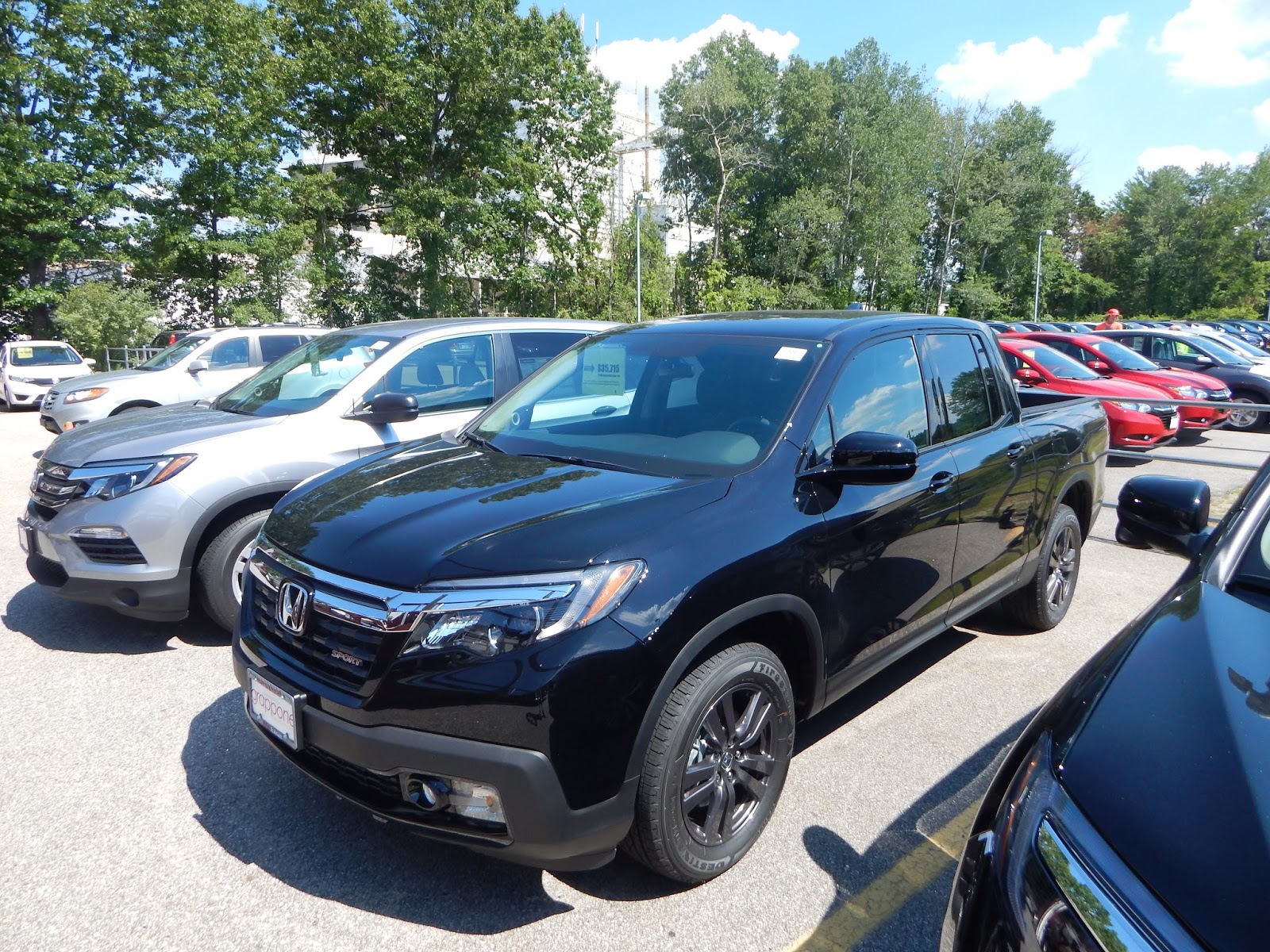 After a two year hiatus, the Honda Ridgeline is back and better than ever. The second generation Ridgeline rides on a completely new platform and has been redesigned inside and out to do battle with established heavyweights such as the Toyota Tacoma, Nissan Frontier, Chevrolet Colorado, and GMC Canyon.
 Honda positions the Ridgeline as a utility vehicle for those who do not need the capabilities of a full size pickup, and would like a comfortable ride. To that end, the new Ridgeline continues to share its unit body underpinnings with the Honda Pilot crossover. The original Ridgeline received criticism from some truck buyers for not being a real truck. They say real trucks are built using body on frame construction to maximize towing ability.
Although the Ridgeline lags its competitors in terms of towing capability, it offers a much better ride for its passengers and gets superior fuel mileage. Honda quotes fuel economy at 18 mpg city, 25 highway, and a combined rating of 21 mpg for all wheel drive models. Towing capacity is rated at 3,500 pounds for front wheel drive Ridgelines and 5,000 pounds for all wheel drive Ridgelines. For comparison, the base four cylinder Tacoma can pull 3,500 pounds and is capable of towing as much as 6,800 pounds with the optional tow package. The bed of the Ridgeline has grown four inches longer and can comfortably hold 4x8 sheets of plywood or a couple of motorcycles. Payload is quoted at 1,584 pounds, among the best in the segment.
Novel features include a tailgate that can swing out as well as down for versatility while loading the bed. There is also a handy in bed storage compartment capable of carrying an additional 7.3 cubic feet of cargo. Inside, the rear seats split 60/40, and can lift up to make room for groceries and even a bike. A new feature for this generation is an in-bed audio system that uses speakers mounted behind the bed lining to play music. An outlet in the bed allows hookup for a television or power tools.
 Of course, the Ridgeline comes equipped with Honda's latest safety and convenience technology. Apple CarPlay and Android Auto are standard on higher tier models, as is HondaLink, which can stream music, access social media, and even make it easy to schedule service appointments. A rearview camera is standard on all models, and other driving aids such as blind spot monitoring systems and lane keeping assist are part of the Honda Sensing package.
The Ridgeline does start on the expensive side of midsize pickups with an MSRP of around $29,475. However, keep in mind that the Ridgeline is only offered with a 280 hp V6 engine. Apples to apples, the Ridgeline is priced competitively with comparable models, and offers several class exclusive features that should entice prospective buyers. Honda did its research when developing the Ridgeline, and built a truck that will suit the majority of people's lifestyles.
Back in 2005 when the first Ridgeline debuted, it was heralded as the right truck at the right time as gas prices started to climb. Prices are lower now, but fuel economy remains a priority in the truck industry. Ford has already made strides in weight reduction and fuel efficiency by offering a turbocharged V6 and aluminum bodywork on its best selling F-150. With the innovative new Ridgeline, Honda stands to gain a healthy market share of those looking for a fuel efficient, comfortable riding, and versatile midsize pickup.
Sunday, June 12, 2016
First Speculations for Transformers: The Last Knight
 |
| Looks like Optimus had a rough flight |
I will admit that I generally like the Transformers movies. The first one was a lot of fun, Revenge of the Fallen is passable, and Dark of the Moon is hindered only by the convoluted Sentinel Prime plot twist. I will be going into The Last Knight on a sour note, as Age of Extinction was my least favorite movie. It could have been good, but there are numerous problems. The tone is way too somber, the product placement is annoying, the story makes no sense, and there are so many filming errors that it's hard to take this film seriously. I still have yet to buy it on DVD, and probably won't unless The Last Knight blows my mind and I need Age of Extinction to fill in the story.
As we know, Age of Extinction ended with Optimus Prime flying into space in search of his creators. From the looks of this image, the trip didn't go too well. Optimus's face is all faded and dirty. I'm curious about the red on his left cheek, since he didn't have any red markings on his face when he left. The most interesting aspect of this image is his eyes. Instead of their usual blue, Optimus's eyes are purple. The last time I saw a transformer with purple eyes was Megatron in the Transformers: Prime TV series. Megatron was under the influence of dark energon at the time. Dark energon is said to be the emanation of Unicron and can be used to increase one's power, revive the dead, and corrupt Transformers.

It is possible that somehow, Megatron is able to extract his conscience from Galvatron's body, but I would hope that the writers don't go for something as crazy as that. Ideally, The Last Knight should focus primarily on Optimus Prime's search for his creators. A story about Optimus Prime travelling the universe would be quite entertaining. He could encounter all kinds of alien species and have a Star Wars style adventure. For that matter, he could meet other characters from the Transformers universe who have yet to make an appearance on screen. Imagine if Optimus found Ultra Magnus as an obedient slave for the creators and is able to show him a greater calling as an Autobot.
The Transformers still on Earth may go back to working for the government. However, I find it more plausible that after everything from the last movie, they would just like to be left alone. Bumblebee and the other Autobots could become the guardians of the Yeager family, as Optimus instructed. They may be drawn into conflict as Galvatron, who survived the battle of Hong Kong, rallies all remaining Decepticons on Earth in a bid for revenge. He would likely chase down the humans and Autobots until a final encounter where Optimus arrives with reinforcements from the creators' homeworld to drive off Galvatron.
The details can change and some character subplots could be introduced to spice things up, but I feel this is a logical story based on the events of the last film. But, if I have learned anything, it's that the logical route is rarely followed in these films. We'll probably end up with yet another poorly written, explosion-filled, product-saturated headache. Only time will tell. Until then, I anxiously await confirmation on new Transformers and will pour over all the new vehicles as more information becomes available.
Sunday, May 29, 2016
Redline Review
Hello readers. Sorry for the delay in new posts. I've had a lot going on this month such as moving to a new house and starting a new full time job. I haven't had much time to sit and write in a while, but now that things are settling down, I'm going to get this blog up and running again. Thank you very much for your patience.
 Today, I am going to review one of my favorite anime movies: Redline. Redline is about a type of racing that sort of combines the idea of Speed Racer with a dash of Podracing from Star Wars. Racers from across the universe dream of competing in Redline, the most dangerous race of all. Anything goes at Redline, and racers are lucky to survive. Here we find our protagonist, Sweet JP. JP is a highly skilled, yet goodhearted racer. He doesn't approve of high tech weapons on his car, instead relying on his natural talents as a racer and a few caps of nitro to get the most out of his TransAm 20000. JP almost wins the Yellowline preliminary race, but sabotage from his best friend and mechanic, Frisbee, costs him the victory.


I never saw the 2008 Speed Racer live action movie, but I feel like this is what that movie should have been. The racing action is balanced by well developed lead characters, excellent humor, and an engaging story. Racing anime tend to sit between a spectrum bookended by the fun, but campy, Speed Racer on one end, and realistic and overly technical Initial D at the other. Redline rests just off center towards the Speed Racer end, but is able to keep audiences glued despite getting over the top ridiculous at times. It's one fast ride of a movie, but audiences are going to enjoy every minute.
 Today, I am going to review one of my favorite anime movies: Redline. Redline is about a type of racing that sort of combines the idea of Speed Racer with a dash of Podracing from Star Wars. Racers from across the universe dream of competing in Redline, the most dangerous race of all. Anything goes at Redline, and racers are lucky to survive. Here we find our protagonist, Sweet JP. JP is a highly skilled, yet goodhearted racer. He doesn't approve of high tech weapons on his car, instead relying on his natural talents as a racer and a few caps of nitro to get the most out of his TransAm 20000. JP almost wins the Yellowline preliminary race, but sabotage from his best friend and mechanic, Frisbee, costs him the victory.
Frisbee and JP are in up to their necks with the mob, and have been involved in various race fixing schemes. Money from the mob pays for JP's bail bond funds. Following Yellowline, JP is wondering what to do next when word come out that two racers decide to drop out of Redline, and fans vote JP into the race. This time around, Redline will be held on Roboworld. However, Roboworld's president vows to destroy the racers by any means necessary. Not only do the leaders of Roboworld despise racing culture, the high levels of media coverage will likely expose Roboworld's illegal weapons buildup. JP is ready to give the race his all, and hopes to get on better terms with fellow competitor and Yellowline winner, Sonoshee McLaren.

The strength of Redline rests in the characterization of JP and Sonoshee. Each of them embodies stereotypical racer tropes. JP is the easygoing nice guy with a questionable past. He allowed himself to be arrested so that Frisbee wouldn't get into any more trouble. And Sonoshee is the strong willed independent female out to prove herself to all the boys. As formulaic as their budding romantic relationship is, it works because the writers don't make it the sole focus of the story. In addition, viewers get brief bios of the other racers, which range from satirical, to clichéd, to downright comedic. Other plotlines involve Frisbee coming to terms with his involvement with the mob, and Roboworld's efforts to destroy all the racers.
Redline is also a technical and artistic masterpiece of a film. It was the first time I had been exposed to the work of Madhouse, and I have been impressed with everything I have seen from them since. Every single frame is hand drawn, and it took the people involved in making this film seven years to finish. I can only imagine how painstaking it was to render all 100,000 frames. Fortunately, the result is completely worth it.
I never saw the 2008 Speed Racer live action movie, but I feel like this is what that movie should have been. The racing action is balanced by well developed lead characters, excellent humor, and an engaging story. Racing anime tend to sit between a spectrum bookended by the fun, but campy, Speed Racer on one end, and realistic and overly technical Initial D at the other. Redline rests just off center towards the Speed Racer end, but is able to keep audiences glued despite getting over the top ridiculous at times. It's one fast ride of a movie, but audiences are going to enjoy every minute.
Thursday, April 21, 2016
Crisis at Fiat-Chrysler
Recently I read an article on Car and Driver about how Fiat-Chrysler CEO Sergio Marchionne is questioning the profitability of Tesla's new Model 3 sedan. To this I say, Marchionne should worry about his own company's health before offering his two cents on others. This is just the most recent in a line of news articles that have me really questioning if Fiat-Chrysler is going to survive the long run. It seems to me that the company has become a house of cards just waiting for the right catastrophe to topple it over for good.
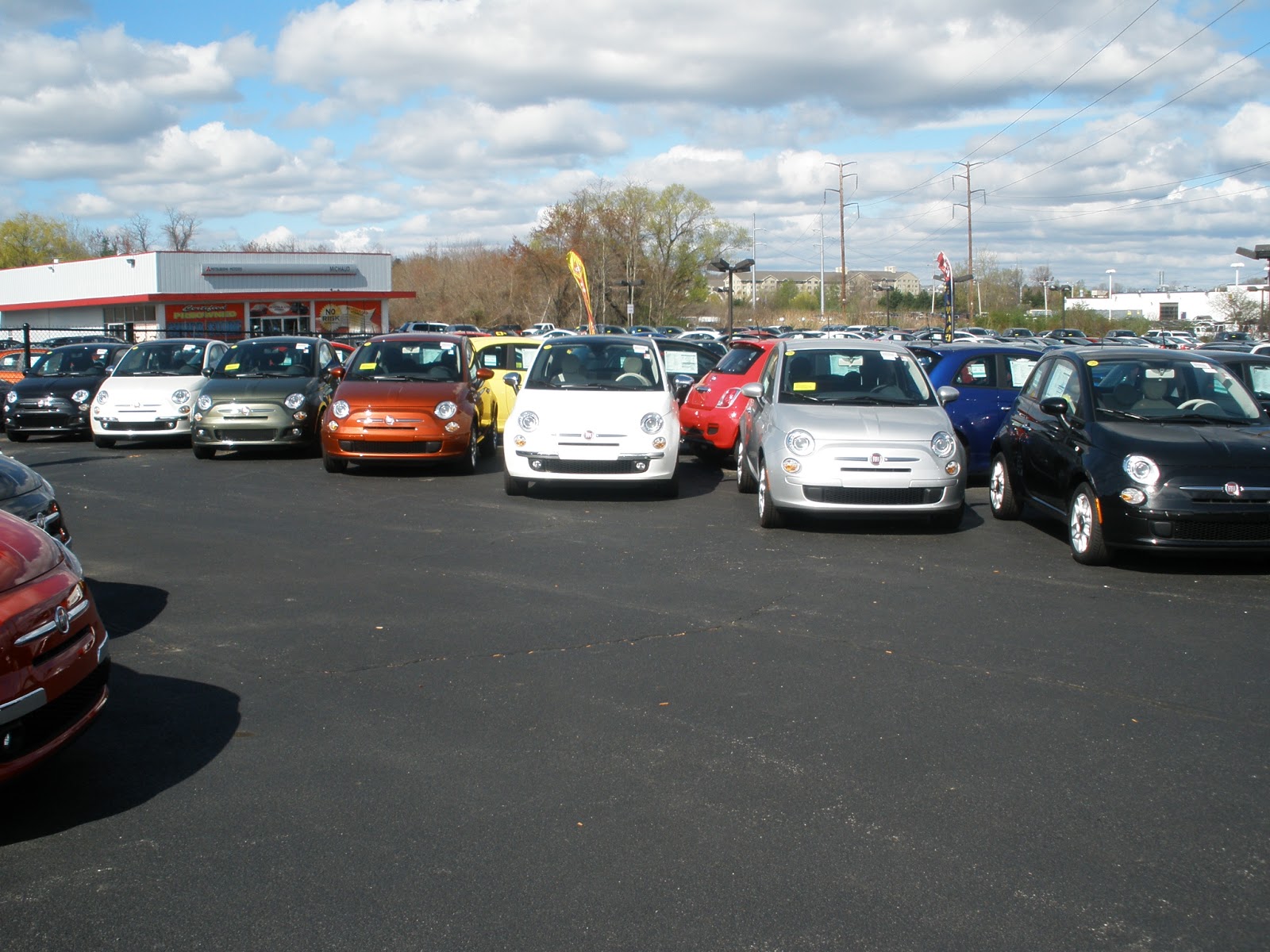 |
| Fiat's return to the US has been less than successful, with dealers struggling to sell inventory |
Looking through monthly sales numbers led to my initial concern. Jeep
and Ram post healthy gains month to month. This makes sense considering
people's ravenous appetite for SUVs, trucks, and crossovers. For 2015, 39
percent of all new cars that left Fiat-Chrysler showrooms were
Jeeps. However, it must also be noted that Dodge, Chrysler, and
Fiat, in the same articles, usually post double digit declines month to
month. For the most part, Dodge,
Chrysler, and Fiat don’t offer light trucks. Exceptions include the
Dodge Durango, which is kind of a niche product as the only remaining
rear drive, V8 powered, three-row midsize SUV; and the Dodge Journey, which is
mediocre in all criteria. I'm surprised the Fiat 500X hasn't been a
bigger sales success. Its sister car, the Jeep Renegade, is selling like crazy. Fiat desperately needed this car to ride the wave
of sub compact crossover sales, but I'm guessing poor reliability
and lack of dealership visibility have hurt sales potential. Fiat
has only 206 showrooms in the US, which is about the same number
of Chrysler showrooms in New York and California alone.
For 2016, all five Fiat-Chrysler brands are in the bottom seven Consumer Reports new car predicted reliability positions. Chrysler's nine speed automatic transmission has been a source of constant headaches, and don't forget the public hacking of a Jeep Cherokee through its infotainment system which led to a recall of 1.4 million Chrysler cars to fix the vulnerability. Reliability has never been Chrysler's strong suit, and their shoddy reputation is turning away potential new buyers looking for a trouble free motoring experience.
This leads to the next part of my concern.
I have addressed the past and the present, and now must look to the
future. Here is where I develop serious doubt as to Sergio
Marchionne's leadership skills. It was announced in January that the Dodge
Dart and the Chrysler 200 would not be renewed for a second generation.
Instead, Marchionne is going to increase production of Jeep and Ram
vehicles, citing low gas prices as a permanent condition. My first
reaction to this was something along the lines of, "What an
idiot." Gas prices will go up eventually, and Fiat-Chrysler will be up
a creek when they do. Midsize and compact sedans are crucial to any
mainstream automaker's lineup to keep fleet fuel economy high.
Even if gas prices stay low, the government will continue to
pass increasingly stricter fuel economy regulations.
 |
| Once the next big thing, the Dodge Dart will not be renewed for a second generation |
The Dart was released to great fanfare in 2012 as
a breakthrough for Dodge. It was the same story with the 200 in
2014. That car was supposed to end the nightmare that was the
Sebring. But, as Marchionne states, the Dart's and the
200's disappearance will not significantly hurt Chrysler's profits, which
indicates that they can't be selling that many or making a profit off of those
they do sell. Nevertheless, announcing a car is to be discontinued while
it's still got a few years left in production could really hurt consumer
confidence and stifle whatever sales potential the cars have left.
I could ramble on forever about Marchionne's
crazy schemes. He expects Alfa Romeo to be selling 400,000 vehicles
globally in 2020. Alfa could launch an entire lineup tomorrow and it will
still take years to reach those kinds of numbers, if they ever reach them at
all. The brand is positioning itself as an Italian alternative to Audi,
and it took Audi the better part of a decade to shed its old image as a
purveyor of slightly nicer Volkswagens to that of a legitimate luxury car
maker in its own right. Considering Alfa Romeo is starting from
scratch, with a history of notorious reliability behind it, Marchionne's
statements are hopelessly optimistic. Marchionne also keeps looking for business partners;
in particular he is constantly courting General Motors CEO Mary Barra about a
merger. Smartly, she isn't biting. If Marchionne had confidence in
his own business, he wouldn't keep asking others to join him.
Furthermore, Fiat-Chrysler has nothing valuable to offer GM. GM has made
tremendous progress following its bankruptcy. There is no need for them
to stoop back down to Chrysler's level.
A big part of GM's resurgence has to do with a
significantly improved product lineup. Chrysler's lineup is mostly the
same since before its partnership with Fiat, and the company has remained quiet
on the future of several key models. The Dodge Charger, Chrysler 300, and
Dodge Challenger desperately need a top to bottom update, and the current
Durango should be nearing the end of its product cycle. However, no test mules
have been spotted and no announcements have been given regarding
replacements. There's still time, and I would expect there to be some
announcement by the end of this year about some unveilings at the 2017
Detroit Auto Show.
So, all in all, things look pretty gloomy for
Fiat-Chrysler. A dearth of competitive products, poor reliability, and corporate mismanagement are appearing to stifle
the group. Then again, for Chrysler, that might just be business as
usual.
Thursday, March 24, 2016
One-Punch Man Review
 |
| Genos (left) and Saitama |
Superheroes, they are not overused. Just kidding. They are terribly overused. The superhero genre is one of the most saturated in the market. The biggest culprits would be Marvel and DC Comics for churning out countless blockbusters nearly every other month, and don't get me started on their myriad television series. This isn't to say their stuff is terrible. It's just that superheroes are the easiest way to milk money from your audience. They take little thought to create, and sometimes make up for lackluster storylines with state of the art special effects. It takes something really unique to break through the fog that superhero media creates, and thankfully, there is just such a thing in the form of One-Punch Man.
One-Punch Man follows a man named Saitama, who always dreamed about becoming a hero. After defeating a monster one day, he trained constantly for three years until he obtained the strength of a god. The series follows Saitama as he searches for opponents whom he can defeat in more than a single punch, while looking for some recognition of his heroic actions. It's a fairly interesting premise. Of course, this also puts the show at a disadvantage. If Saitama is invincible, there is little at stake in any of the fights. Thankfully, there is more to the show that keeps viewers interested. Chief among which are its rich cast of characters and its insightful look into the business of being a superhero.
For a genre that has its share of creative bankruptcy, One-Punch Man does introduce a number of characters over the course of the series. In addition to Saitama, the second main character is a cyborg named Genos. He is younger than Saitama, and whereas Saitama has grown bored with his life, Genos is a hotshot young gun ready to make his mark on the world. Genos was once a normal human, but became a cyborg after another cyborg killed his family. Vowing revenge, Genos scours the land for foes he can test his strength against so that he will be ready when he confronts his nemesis again. Unfortunately, Genos meets his match in Mosquito Girl, who makes short work of him. Luckily, Saitama arrives and easily defeats Mosquito Girl. Genos then pledges himself as Saitama's apprentice hoping to learn how to become just as powerful. Other interesting villains appear over the course of the series, as do several heroes from the Hero Association.
As seems to be the norm for superhero material nowadays, regulation of heroes makes its presence known in One-Punch Man. The Hero Association was created by a multi millionaire in order to fight against crime, monsters, and other threats. Both Saitama and Genos enroll in the Hero Association in order to gain more recognition as heroes. The Hero Association presents what might be the most interesting aspect of the series. The Association manages all registered heroes through a meritocracy. It uses a class system to rank heroes from S to C based on their skill and by their number of heroic deeds. This puts heroes not just in competition against evil, but in constant competition with each other to advance in rank, especially as you look further down the rankings. C- Class heroes need to meet a weekly quota for heroic deeds, or else be expelled from the Association, whereas high ranking heroes can sit around as they please, only getting involved if they feel it is worth the risk and reward. Meanwhile they encourage lower class heroes to work harder in order to climb up the rankings. It's pure capitalist rhetoric, but it makes sense. When we do see higher ranked heroes in action, there is little doubt left as to how powerful they are. They probably had to work hard to get where they are, too, and are likely only repeating what they were told themselves.
Fortunately, not all heroes only care about fame. Some heroes do enjoy helping people. The best example of this would be Mumen Rider. He is the top ranked C- Class hero, and is always riding his bicycle to a conflict. He doesn't have much for strength, but his willingness to constantly put his life on the line against overwhelming odds is to be commended. During the final episode, Mumen Rider along with some other lower class heroes aid in the evacuation of civilians while Saitama and the S-Class heroes fight off an alien invasion. There are many different ways to be a hero, even though some might be less glamorous than others. That, and the show's message about the purity of motives are One-Punch Man's greatest strengths. Heroes and villains ponder over why Saitama is as strong as he is. The answer stems from Saitama's dedication to training himself and his sincere desire to help people.
The animation for One-Punch Man is superb. Fights are expertly choreographed and are carried out with savage ferocity. Every character has a unique design that serves to either compliment or contradict their personalities. One shortcoming of the series I can think of is that civilians tend to be forgotten amid the action scenes. Although there is massive destruction throughout the episodes and it is implied that there is often great loss of life, its hard to appreciate the gravity of the situation. It's like this is several other superhero stories, so I can give One-Punch Man a pass in this regard. It appears that some newer films such as Batman v Superman and Captain America: Civil War are going to address civilian casualties to some degree, which is good. The actions of heroes and villains alike have consequences on everyday folks, and it appears that writers sometimes overlook that as they design over the top action scenes.
I highly recommend One-Punch Man for anyone who is a fan of superheroes and is looking for something extremely funny and surprisingly thought provoking. The superhero genre needs something new to balance out the sheer volume of products. The 12 episodes shown leave a lot of questions unanswered and character development to be explored. I excitedly await any future seasons of One-Punch Man to be produced.
Subscribe to:
Posts (Atom)