Sunday, December 24, 2017

Feel The Sting: Kia Stinger Charts New Course for Korean Brand

The four door sedan is a dying species. I already noted that in my article on cars that will be discontinued for 2018, but it bears repetition as sales figures for 2017 finally trickle in. Crossovers outsold small cars and midsize cars by a margin of almost two to one. Those who continue to offer sedans need to get creative in order to maintain whatever percentage of market share is still available.

The Kia Stinger enters the marketplace for the 2018 model year with a broad skill set. Singlehandedly, it wants to be a sports sedan, a near-luxury car, and a utilitarian hatchback. Stylistically, it reinterprets Peter Schreyer's design language for Kia into what is considered an ideal gran turismo. A high waist, low roof, long hood, and short tail are all there. A fastback roofline adds a measure of practicality to the vehicle. The rear hatch can be raised higher than a traditional sedan trunklid. Cargo space is a generous 23.3 cubic feet. That figure rises to 40.9 with the rear seats folded. It also helps give the car a strong, hunkered-down look when viewed from the side.

"This car is all about the stance, proportion, and balance," says Schreyer. "We sought out elegance and athleticism rather than aggression and brutality."

That isn't to say the Stinger lacks in terms of menace. It carries over Kia's corporate tiger nose grille design flanked by optional full LED headlights. A large lower intake and vertical side intakes work with dark chrome finished fender vents to manage air in and around the car. Quad exhaust pipes and a rear diffuser hint at the animal contained within.


That animal is either a 255 horsepower 2.0 liter turbocharged four-cylinder engine or a 365 horsepower twin-turbo 3.3 liter V-6. Power is sent to either the rear wheels or all four. Both engines are connected to an eight speed automatic transmission, and the V-6 version should sprint from 0-60 mph in 4.7 seconds.

All Stingers come with leather trim as standard with ultrasoft Nappa leather reserved for the V-6 powered GT models. Buttons for climate control and multimedia management are greatly appreciated as more and more car makers migrate those controls to fiddly touchscreens. Naturally, the Stinger has a touchscreen too to handle navigation, phone, and sound system settings. A 7-inch information display set between the speedometer and the rev counter lets you scroll through driver oriented settings such as acceleration and cornering information measured through a g-force meter. An optional head-up display shows crucial information in the driver's line of sight so he or she can stay focused on the road ahead.

Base four-cylinder models should start under $33,000 and rear drive GT trims will start around $40,000. All wheel drive adds $2200 to each version. Advanced safety features and other convenience packages can drive prices of the GT into the low $50,000s. Hefty money for a Kia, but those willing to forgo a little bit of luxury should be able to find themselves a good deal.

Chief rivals for the Stinger at that price include the Audi S5 Sportback and the BMW 4 Series Gran Coupe. If you think the Kia is expensive, consider that the Audi starts about $15,000 higher than the Stinger, while opening bids for the BMW start at an even $50,000. Once you start ticking option boxes, prices can quickly extend into the $60,000 range.

The Kia is also roomier than the Audi in terms of passenger and cargo volume, and is more powerful. Its V-6 even makes more horsepower than the one used in Porsche's rear wheel drive Panamera; and don't even ask how much that car costs.


Dollar for dollar, I think the Kia Stinger's greatest competition will come from the soon to be released Buick Regal Sportback and hotted up Regal Sportback GS. It too will be offered with a turbo four-cylinder and a V-6, albeit naturally aspirated. With a horsepower rating of 310, the Regal GS loses a lot to the Stinger. However, prices for the GS should not rise much higher than $40,000 with all the options checked. These two should definitely be cross shopped as prospective buyers search for the right balance of power, practicality, and luxury for their needs.

Right now, the Stinger is an anomaly in Hyundai and Kia's range. It has no platform mate anywhere in either brand's lineup, although the basic structure is planned to migrate to a midsize Genesis sedan in the near future. My biggest fear with the Stinger is that it will be a one-off with no eventual successor. I hope that platform sharing with Genesis will provide the necessary economies of scale to keep the Stinger in production for several years to come. I'm sure it can find a place as the sporty entry-level luxury car into the Korean conglomerate's portfolio, with owners likely migrating upward to a Genesis car later.

FINAL VERDICT: The Stinger comes across as a very likeable car. Priced right, it can be an excellent value play compared to the luxury sports sedan establishment.

Thursday, November 30, 2017

A Heartfelt Thanks From Me to You

It makes me so happy to have reached 10,000 page views on my blog. I appreciate all of you taking the time to read my thoughts on the things I am passionate about.

If I could make one wish moving forward, I would like more of you to engage with my posts. Please tell me your thoughts on what I'm writing about, whether you agree or disagree, or have any other information or perspective to add.

The whole point of this blog is to share the love of cars, trading cards, and cartoons with the world. We all need to do our part in spreading the word to keep people's passions burning.

I am immensely pleased with the growth this blog has experienced in the past year. Thank you again for making it all possible!

Sunday, October 29, 2017

Death Parade Review


I've decided that every year around Halloween I am going to do a review on something eerie. Last year I looked at Scooby-Doo on Zombie Island. This year I will take an in-depth look at the 2015 anime series Death Parade. Death Parade is among a select group of anime that is not based on a preexisting manga. The series spawned from a short film titled Death Billiards, which was originally produced by Madhouse for the Young Animator Training Project's Anime Mirai 2013.


So what's Death Parade about? Well, whenever a person dies, they are sent to one of many bars run by bartenders serving as arbiters. Decim, the series's main character, runs a bar called the Quindecim where he is responsible for judging couples who died together. It's a formulaic process. The humans arrive at Quindecim with no memory of how they got there or of the events leading up to their deaths. Decim on the other hand receives a handful of his guests' memories from the information bureau so that he has a rough idea of who each of his guests are. Then he explains to the guests that they cannot leave the bar until they have played a game. One caveat is that the players will be putting their lives on the line, and Decim shows them a sinister collection of human dummies behind the wall of his bar to drive the point home. Frightened and with no other choice, the humans play the game while Decim decides who will be reincarnated and who will be sent into the void.


The whole idea of the games is to create severe tension which will bring out the darkest parts of each player's nature. After all, fear and self preservation are the most primal human emotions. This in theory is the last piece of the puzzle in showing the arbiter who these people really are. While they are playing, the humans slowly regain their memories of what happened to them and ultimately realize that they are dead.

It's an intriguing premise, one that wouldn't be out of place in an episode of The Twilight Zone. But whereas a Twilight Zone version of this would only end with the realization that the guests are already dead, Death Parade goes a step further and analyzes the entire system used to judge people's souls.

Enter Chiyuki: a woman who wakes up in this strange reality with no memory of her past life and is brought to the Quindecim by the supervisor Nona to be Decim's assistant. Almost immediately, Chiyuki begins to notice flaws in Decim's judgments, claiming that there may be more driving each guest's actions than pure negative emotions. She is also horrified to learn that sometimes Decim rigs the games when it appears that some people need a little push to release their inner darkness. Throughout the course of the series, Decim becomes less sure of himself as an arbiter due to Chiyuki's influence. Is he actually creating the darkness in people's souls rather than simply bringing it out?

This leads to the revelation that Decim is an arbiter who has been infused with human emotions, even though he doesn't quite understand them.  Nona accepts that there is something ironic and unfair about the arbitration process. The arbiters are incapable of feeling emotions or knowing what it's like to die, yet they are the ones who are tasked with passing judgment on those that do. Therefore, Decim is her experiment in improving the system, and Chiyuki has been unknowingly tasked with helping Decim understand what it means to be human.

This anime is one of my all time favorites. It raises great topics of conversation about living a fulfilling life, what it means to die, and the morality of judging people based on incomplete information. That being said, I would caution viewers about some disturbing content. Characters violently attack each other, blood is shed, and murder, rape, and suicide are discussed and shown.

If there is anything I can criticize, it would be the show's lack of closure. I want to learn more about how this afterlife works. Several minor characters give us tiny glimpses of what goes on behind the scenes. There's Castra, who sits on a throne of flesh and bones and determines which bar each deceased person will visit. Her words of wisdom are "All righteousness is in competition with itself; I'm surprised it doesn't lose interest." We also meet another arbiter named Ginti. Whereas Decim is outwardly polite, Ginti is a belligerent, ill-tempered jerk who riles his guests as much as they rile him. Then there's Quin, a member of the information bureau who is Decim's predecessor. Managing people's memories is so stressful, that she turns to drinking to put her mind at ease. And finally we have Oculus, a childish old man who is the self-professed god of this whole operation. He spends the majority of his time playing pool while Nona runs the arbitration business.


Not many of these characters are given a lot of screentime. But when they do have your attention, they drop little snippets that beg for further elaboration. Oculus mentions in Episode 5 that God has been gone for a long time. What does that mean? Is God dead? High School DxD presented a world where God perished in a battle between angels and devils. What happened in Death Parade's world that caused God to go away?

In Episode 7, Quin states that the increased number of deaths is making it difficult for her to do her work condensing people's memories. Could this be why the arbiters' judgments are incomplete? When deaths were less frequent, were the arbiters given more complete information on their human guests? There is so much more to this universe as hinted at sporadically by the various side characters. I just wish more time was spent on them and their stories in addition to Decim and Chiyuki. Twelve episodes is really insufficient to gain a complete picture of this world. I think that a 26 episode season would have allowed the supporting characters and side plots to really shine. At the very least, a second season would be appreciated to answer some of my questions.


Well, I think that covers just about everything. Overall Death Parade is an extremely thought provoking series with two excellent main characters who help each other learn and grow. It should not be missed by anime fans, or people looking to explore the pros and cons that go with making impartial, emotionless judgement calls versus those informed by the heart and soul.

Monday, October 9, 2017

Everything Wrong with Pokemon Evolutions


Every day I look at PokeBeach to see the latest news in the world of Pokémon. In particular, I pay attention to new trading card game products to see which ones I will consider parting with my hard earned money for. One of the first things I look at with these new promotional tins and collection boxes is the pack selection. After all, a product's value is determined by the quality of its contents.

I've been disappointed with several products lately due to their inclusion of the XY Evolutions expansion set. It has to be one of the worst sets of the XY series, and perhaps one of the worst sets period. Many forum users and popular Youtubers have expressed their displeasure for the set for multiple reasons. Evolutions represents a huge missed opportunity to end what was arguably one of the best eras of the entire Pokémon Trading Card Game.

XY Evolutions was meant to be a remake of the original Base Set which was released in Japan on October 20, 1996 and in the United States on January 9, 1999. Vintage artwork is used for the cards, while the attacks and effects have been modified to fit within the current format.

The main complaint against Evolutions centers on the cards themselves not being very competitive. A few cards have some potential to work in existing deck archetypes, but none of them brought any game changing mechanics to the table. According to Andrew Wamboldt of the Charizard Lounge, this was due to Pokémon themselves not wanting to shake things up too much just prior to the release of the next generation Sun & Moon base set, which would introduce powerful Pokémon-GX to the meta game. Evolutions' main purpose was to satisfy collectors who remember opening Base Set packs two decades ago - which brings me to the next point.

The entire year of 2016 was marked with promotional products to celebrate the twentieth year of the Pokémon franchise. A TV spot was shown during the Super Bowl, various legendary Pokémon were distributed to video game players throughout the year, and collection boxes containing trading cards from a special set called Generations were released each month.

Generations contained reprinted cards from XY era expansions with the stipulation that all the Pokémon featured had to be from the first generation. Exceptions to this rule were Meowstic-EX, and cards from the Radiant Collection subset. So when Evolutions came out in November 2016, it felt like we had already seen it before.  Not only that, cards included in Generations were actually playable in several different decks, and pull rates for ultra rare cards were usually pretty good.

Hopefully, with the release of the fourth Sun & Moon set, the number of Evolutions packs included in products will decrease. It simply had no business being a mainline set. Making Evolutions a mini set would have been a much better choice for both collectors and players. That way, those who aren't caught up in Base Set nostalgia can purchase the products they want without having this otherwise useless set shoved down their throats. There also should have been some differentiation between Evolutions and Generations. It's rather hypocritical for a set called Generations to focus only on one particular generation of Pokémon.

I just hope that Pokémon comes up with a better way to end Sun & Moon when the time comes. Usually, each series concludes with a greatest hits collection featuring new artwork for popular cards. That was the case for Call of Legends and Legendary Treasures at the end of Gen 4 and Gen 5 respectively. Evolutions was a rare misstep for a franchise that otherwise had every reason to celebrate 20 successful years, and several more to follow.

Sunday, September 17, 2017

5 Automotive Obituaries for 2017


Good cars come, and good cars go. Here is a list of five automotive names we lost in 2017. To make this list, a model must be discontinued from an automaker's lineup with no immediate or eventual replacement in sight. For example, although the Volkswagen CC has been dropped for 2018, its spirit lives on in the brand new Arteon.

Buick Verano
To be fair, the Verano was effectively discontinued after the 2016 model year, with only a handful of 2017 models produced before its assembly line shut down for good. Back in 2012, the idea of a small, affordable, fuel-efficient car from Buick made perfect sense. However, persistently low gas prices and lack of interest in sedans of all sizes killed the argument to continue investing in the Verano model. With the death of the Verano and uncertainty regarding the LaCrosse, the Regal is the only sedan with any solid future over at Buick.

Chevrolet SS
A bitter loss no matter how you look at it, the Chevrolet SS was the ideal American sedan - rear wheel drive, manual transmission, and a massive V8 straight from the Corvette. For those who were heartbroken over the untimely loss of the Pontiac G8, General Motors gave them another chance by bringing the next generation Holden Commodore to the United States as the Chevy SS. Yes, we knew it wasn't the most practical car, so it was only going to sell in limited numbers, and, yes, its fate was sealed once GM bailed on its Australian manufacturing facilities.

But that sells short the SS's astonishing abilities. It handily outperformed comparable Dodge Chargers in all objective measurements, and came with a healthy dose of standard equipment. Hurting the SS's cause though was styling which was a bit too generic, a $45,000 base price, and a name that lacked any real cachet. If you still want an SS, unfortunately you're too late. The last day to order one was back in February. Check out any remaining dealer stock if you missed your chance to buy this amazing car the first time around.

Honda Accord Coupe and V6
Here is an interesting addition to this list. The Honda Accord sedan carries on for its tenth generation (if they ever do drop the Accord, prepare for the apocalypse). However, the coupe model is no more as is its V6 engine option. Let's go over the engine first. The V6 has been replaced in favor or two turbocharged inline-fours. Base cars will be powered by a 1.5 liter unit and a 2.0 liter will be optional. Blame fuel economy regulations for this.

The death of the coupe is more tragic as it signals the end of what I like to call the personal coupe. Toyota Solara, Chevrolet Monte Carlo, Nissan Altima Coupe, Ford Thunderbird, Pontiac G6; they're all gone. Now if anyone wants a coupe, they will need to get something from a luxury brand which will run them thousands of dollars more. Apparently, the coupe accounted for only a tiny fraction of Accord sales, but I still see quite a few around. For those who consider the Civic a bit too juvenile, and can't find anything sporty enough in an Acura showroom, the Accord Coupe mated with a V6 and a manual transmission hit the well-heeled enthusiast sweet spot. Not anymore.

Hyundai Azera
Large sedans are not doing well. What once was a popular niche for aging drivers is losing market share at an alarming rate to higher riding crossovers. The Azera's place in Hyundai's product history is not to be underestimated. As a semi-premium offering from a decidedly non-premium brand, it was the first step on a journey for Korean manufacturer which resulted in the launch of the Genesis luxury brand. The Azera will continue to be sold in its home market as well as some other select regions around the world. Meanwhile, executives have hinted that a flagship Hyundai sedan tailored to US tastes may return to the lineup. After all, they can't let Genesis have all the good stuff.

Nissan Juke
Hopefully, this obituary is premature as there has been no official word on whether or not the Nissan Juke is going to be axed. However, it appears from sources familiar with Nissan's product planners that the Juke's remaining time among us will be short. Heck, it may have been replaced already. Nissan has quietly imported its European-bred Qashqai to the US as the Rogue Sport. With more conventional styling and better practicality, the Rouge Sport will undoubtedly cannibalize whatever sales potential the Juke has left.

The Juke was one of the first compact crossovers to be sold in America and earned equal praise and scorn for its wild bodywork. With turn signals located at eye level on the hood and the general appearance of a hunchbacked frog, there is no arguing that the Juke was striking to look at. Despite a torquey turbocharged engine and available NISMO performance model, sales of the Juke never took off in numbers comparable to the Kia Soul which came before it, or the Jeep Renegade and Buick Encore which came after it.

A sort-of Juke wannabe called the Kicks is being built in Mexico for the South American market. Slightly larger than the Juke, but carrying on its youthful vibe, there has been no indication since its 2016 launch that it will migrate to the United States.

Wednesday, August 30, 2017

3 Trends in the Sun & Moon TCG Era

We are now three sets into the Sun & Moon era of the Pokémon Trading Card Game. I think this is a great time to look at some of the trends so far and guess where the metagame will be headed in the next couple of years.

Decidueye-GX leads a powerful
group of Grass Pokémon into battle.
1. Grass is the type to beat
It all started with the Sun & Moon base set. Decidueye-GX was clearly the best of the starter Stage 2 cards. Its Feather Arrow ability allows you to put two damage counters on one of your opponent's Pokémon before you attack, while its Razor Leaf attack deals out a respectable 90 damage for only three energy. Even the non-GX Decidueye was the focus of the best theme deck of the set. Strong supporting Pokémon such as Shiinotic allowed you to search your deck for more grass Pokémon while good attackers such as Pinsir and Spinda could hold their own while you got more powerful Pokémon set up.

For added power, you could include Lurantis-GX into grass decks which can do a whopping 120 damage for three energy while also healing 30 from Lurantis. You can also retrieve two grass energy from your discard pile with Flower Supply and still deal 40 damage for only one energy. And that's just from the first set. Guardians Rising introduced a grass type Trevenant which deals damage in multiples of 30 depending on how many Item cards are in your opponent's hand. Golisopod automatically takes 30 less damage from attacks while dealing a potential 150 damage to your opponent's Pokémon-EX or Pokémon-GX. And let's not forget the Lurantis promo card included in the Guardians Rising blister packs which can increase the damage done by your grass and fire Pokémon with its Sunny Day ability. Grass-types are weak to fire, and the recently released Burning Shadows expansion introduced strong fire-type Pokémon and Trainer cards to help control Grass's power, but it remains to be seen if they can be combined into competitive decks.

Bewear is a running gag in the anime.
The crafty people at the Pokémon
Company think it's good marketing
to include a Bewear in every set.
2. Reprints already?
You'd think that with over 800 Pokémon to choose from, coming up with new cards would be incredibly easy. However, that doesn't seem to be the case. Nearly all seventh generation Pokémon with the exception of a few Legendaries have received a print by the third set. In some cases, the new Pokémon have already been reprinted. The Mudsdale and Araquanid lines have already appeared in two sets. The Pokémon Company has fallen head over heels for Bewear seeing as it has been given a card in all three sets so far and has received a promo GX card.

On the other hand, Pokémon who have been given competitive cards in the XY era are back for more in Sun & Moon. Darkrai and Gardevoir from Burning Shadows are looking to exert their predecessors' dominance once again. Mewtwo will come back this November, and it's safe to say we can expect other Legendaries from previous generations to return as GX cards.

3. New rotation, time to rethink strategy
Take a look at this list from PokeBeach's June 2017 TCG Cup. In particular, pay close attention to the names and quantities of Supporter cards that are used. Not a lot of variety is there? What's the point of Pokémon printing 20 or so new Supporter cards in every set if competitive players always use the same one? As of July 2017, all sets going backward from Breakthrough and XY Black Star promos below XY67 will not be legal in standard. Notable losses include VS Seeker, Hex Maniac, Double Dragon Energy, Forest of Giant Plants, and Sky Field. N is unfortunately still around; it's been reprinted regularly since Black & White. I was hoping it would go away as there are other draw cards available which I think are more useful than N.

There is a good YouTube video linked here which offers more details on prominent cards that have been rotated out. I highly recommend you check out the other videos on the channel which are helpful in identifying strategies to use with new cards as they are released.

Verdict
Overall, I'm enjoying the Sun & Moon era of the TCG. The new cards are fun to play with and I find myself eagerly looking forward to the release of each new set.

Saturday, July 22, 2017

Chevy May Kill the Volt

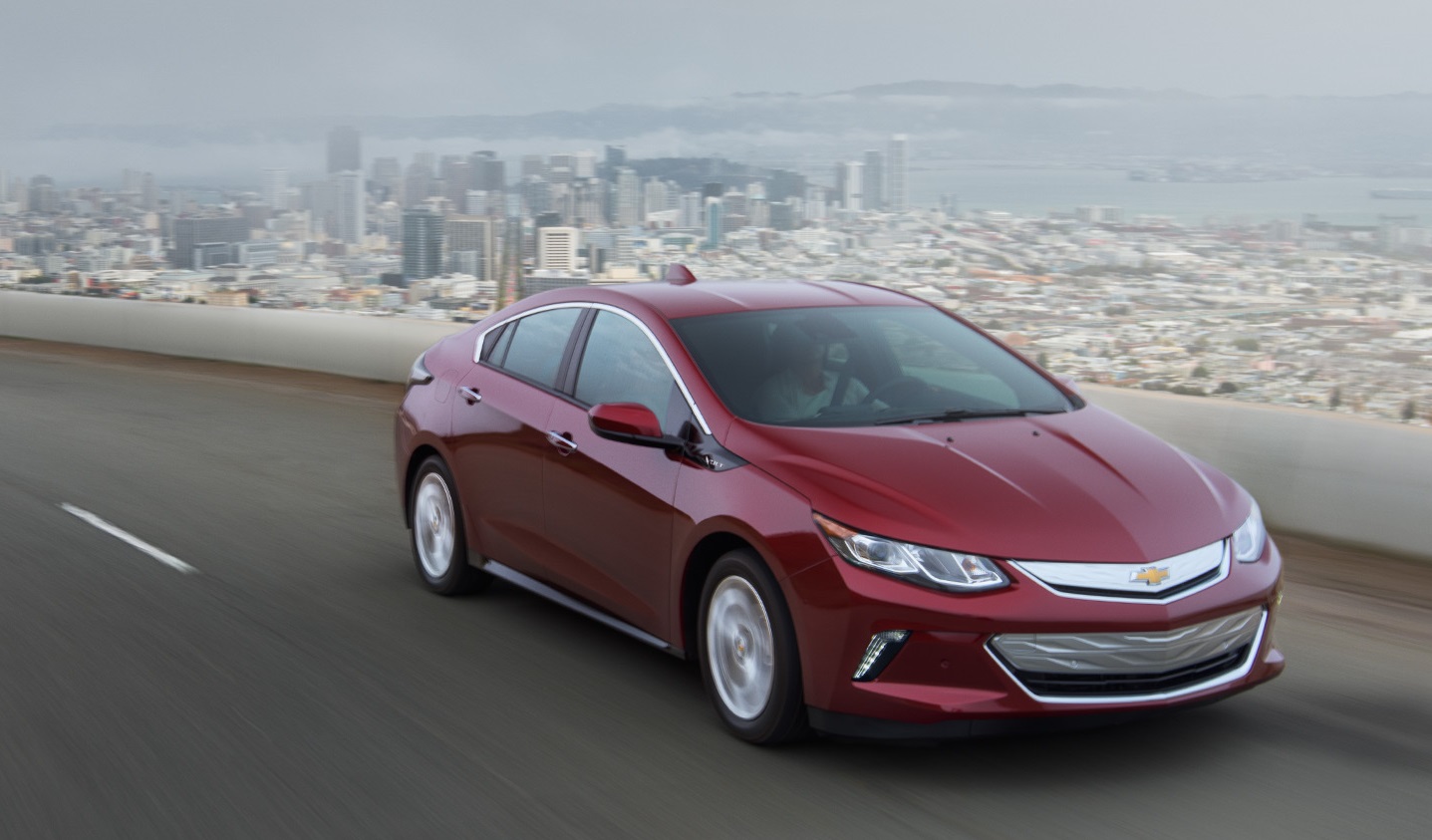
Slumping US car sales have prompted the United Auto Workers union to initiate talks with General Motors about possibly discontinuing select models and replacing them with more popular crossovers. Among the models under review is the Chevrolet Volt plug-in hybrid, once touted as a game changer for the industry.

It is no secret that car sales have been decreasing steadily for a while as consumers flock to SUVs and trucks. Sales of GM passenger cars dropped 17 percent in the first half of 2017 and 36 percent in June. As sale volume decreases, inventories rise. On July 1, GM car inventories skyrocketed to 126 days from 96 days one month ago. That equates to as much as six months of supply on hand. The plants that build these cars have cancelled several shifts putting hundreds of jobs at risk.

Senior Vice President of LMC Automotive Jeff Schuster sees room for consolidation among GM's array of passenger cars. "GM doesn't need all the sedans it has today. They should look at reducing the number of sedan offerings and replacing some with SUVs or crossovers." The models singled out include the Buick LaCrosse, Cadillac CT6, Cadillac XTS, Chevrolet Impala, Chevrolet Sonic, and Chevrolet Volt.

Commentators are putting pressure on GM to create innovative new products, which was exactly what the Volt was when it debuted in 2010. Plug-in hybrid technology allowed for electric driving without worrying about depleting the batteries' power. The first generation model featured an electric driving range of 38 miles while the second generation could go up to 53 miles before the gas engine turned on. It received awards from multiple organizations including Green Car Journal, the American Council for an Energy-Efficient Economy, Consumer Reports, and a number of automotive publications.

I believe factors hurting Volt sales include cheap gasoline and a nonexistent marketing campaign. Obviously, no one is going to purchase a hybrid vehicle if the payback period for the increased fuel efficiency is too long. That is where marketing comes in. GM and Chevrolet need to position the Volt as a smart investment which is a better buy over the long run. Can you recall the last time you saw an advertisement on TV for the Volt? The only Chevrolet ads I see are for the Silverado and the Equinox with an occasional Malibu thrown in. People buy what they see, and not having a vibrant campaign for the Volt almost certainly dooms it to failure.

As for the other models on the list, the older demographic who purchased cars like the LaCrosse and the Impala are instead turning to crossovers and the perceived safety that comes from a higher ride height and all wheel drive. Cadillac is finding that customers are not lining the streets to buy their line of rear wheel drive luxury cars including the CT6, CTS, and ATS, otherwise the XTS would have been discontinued long ago. The XTS continues to be popular among livery services due to its quiet and comfortable ride. If Chevrolet decides to cancel the Sonic, it does so at its own peril. We live in volatile times, and all car makers should be prepared for economic downturns or rising gas prices. Killing off the Sonic puts Chevy in a position without a cheap and efficient compact car to weather the storm.

It will be interesting to see what happens in the next few years as these models come up for renewal. Some such as the Impala and the Sonic could be discontinued while others such as the Volt and the Cadillacs could be replaced with crossovers with similar missions.