Friday, June 18, 2021

Ford Maverick and Hyundai Santa Cruz Push Perception of Small Trucks

Hyundai Santa Cruz and Ford Maverick

How small is too small for a truck? That is the question Ford and Hyundai will be asking customers later this year with the launch of the first ever Ford Maverick and Hyundai Santa Cruz compact pickup trucks.

Ford Maverick with camper trailer

People have always bought trucks for their towing and hauling capability, but for many years now, trucks have also become all-purpose family vehicles. It is increasingly difficult to find stripped out, single cab, long-bed trucks on dealership lots. As a result, MSRPs on trucks have risen exponentially. Half ton trucks like the Ford F-150 sell at an average of at least $35,000. Midsize trucks such as the Ford Ranger can also easily go for more than $30,000. Read the comment section on any review of the Ranger or its competition and you will certainly find people moaning for inexpensive compact pickups like in the old days.

2022 Ford Maverick

The 2022 Ford Maverick revives a name last used on a compact sedan in the 1970s. While not the smallest vehicle in Ford’s lineup, the Maverick will be the least expensive, undercutting the EcoSport by a few hundred dollars. It will be built in Mexico on the same front-wheel drive architecture as the Bronco Sport, but will be longer, lower, and narrower. Prices start at $21,490 for base XL model. By choosing cheap, you will be forgoing features such as cruise control, power-adjustable mirrors, proximity key entry, and alloy wheels. You can get all of that back in the XLT trim for $23,775. The top Maverick trim level will be the Lariat, which starts at $26,985 and should top out in the mid $30Ks with all the options.

At that price range, Ford is positioning the Maverick as an alternative to compact sedans such as the Honda Civic and the Toyota Corolla. In fact, base model Mavericks will be cheaper than entry level 2021 Civics by $755 when they go on sale this fall.

Ford Maverick with kayak

All Mavericks come in four-door crew cab configuration and have two available engines. The first is a 191-hp hybrid drivetrain using a 2.5-liter four-cylinder gas engine and an electric motor. People looking for more power will want to select the turbocharged 2.0-liter with 250-hp and 277 pound-feet of torque. Since the hybrid is only available with front-wheel drive, it will probably appeal most to people who do not travel far off road. However, Ford claims that opting for the hybrid Maverick will reward drivers with 40 mpg in the city.

2022 Hyundai Santa Cruz

People have been looking forward to the Hyundai Santa Cruz since a concept was first unveiled back in 2015. The production version will share much of its structure, exterior, and interior with the all new 2022 Hyundai Tucson, but will ride on a 9.8-inch longer wheelbase. It will also be built alongside the Tucson in Montgomery, Alabama. 

Hyundai Santa Cruz with camping gear

Hyundai would like you to think of the Santa Cruz as a “Sport Adventure Vehicle” as opposed to a truck in order to keep expectations in check. Like the Maverick, the Santa Cruz also has two powertrain options: a standard 2.5-liter four-cylinder making 190-hp and 180 pound-feet of torque, and a turbocharged 2.5-liter with 275-hp and 310 pound-feet. Both engines can be paired with front or all-wheel drive. Pricing for the Santa Cruz has not been revealed, but expect it to start around $25,000 for a base SE and cap off around $35,000 for a top-of-the-line Limited.

Hyundai Santa Cruz with mountain bike

It’s difficult to judge what these trucks can do based on manufacturer provided photos. Hybrid Mavericks can tow up to 2000 pounds while the turbo 2.0-liter can tow 4000. Payload is rated at 1500 pounds regardless of powertrain. The Santa Cruz can tow and haul more with a tow rating of 5000 pounds and a payload capacity of 1748 for the upgraded engine. A Santa Cruz with the base engine can only tow 3500 pounds. Hyundai has yet to provide exact dimensions of the Santa Cruz’s bed, but the Maverick bed has a length of 4.5 feet bed that extends to six feet with the tailgate down. Compared to a Ford Ranger, the Maverick is 11 inches shorter overall and has a seven-inch shorter bed.

Ford Maverick with plywood

Test drives have always been important factors in buying a new vehicle, but they will be even more crucial for these two trucks. Not only will you want to drive the Maverick and the Santa Cruz, you should ask your dealer if you can bring them home with you and try fitting various objects in the bed and throughout the cabin. The Maverick and Santa Cruz will not be for everyone. Prospective buyers should do their due diligence to make sure either of these trucks will fit comfortably into their lives before signing on the dotted line.

Sunday, March 28, 2021

Analyzing the Current Pokemon Card Craze

If someone told me in the year 2000, when I was in the height of my personal Pokémon excitement, that more than 20 years later, people would be tripping over themselves to buy Pokémon cards and leaving shelves bare within minutes, I would have told them that they were crazy. Yeah, Pokémon was big at the time, but there is no way the hype could survive for a quarter of a century. 

However, that is exactly the situation we find ourselves in today. With a pandemic raging around us for almost a full year, people are grabbing onto anything to give them some form of escapism from social distancing, face mask mandates, and Zoom meetings. The result is that products that used to be fairly easy to find have become practically nonexistent on store shelves as limited production capacity due to the pandemic is compounded by insatiable demand.

First it was bicycles. With gyms, restaurants, movie theaters, and other shopping centers closed or operating under reduced hours, people turned to riding bikes just to get out of the house and get some fresh air and exercise. Bike shops around the country experienced business like they had never seen before, with supply unable to keep up with demand. In my neck of the woods in New Hampshire, Goodale's Bike Shop in Nashua saw a 30 percent increase in floor sales and a 900 percent increase in internet sales by July 2020. Ryan Maszczak, the store's chief operating officer also reported that his repair shop and service department were at full capacity. 

Then it was home pool systems. Public beaches remained closed or heavily restricted this past summer, forcing people to cool off at home instead. Pool stores were mobbed with customers once they could reopen safely, while phones were reported to be ringing off the hook and online orders continued to come at a breakneck pace.  

So this brings us to Pokémon. Like other industries, the Pokémon Company had to shut down production of its products until its factories could guarantee the safety of their workers. Supply was reduced while demand soared. Card collecting is something that can be enjoyed from home, so naturally, lots of people turned to Pokémon and other collectible card brands to pass their time.

Meanwhile, a series of incidents were making their rounds on the Internet. High quality cards from some of Pokémon's first ever sets sold for tens or even hundreds of thousands of dollars. There was a first edition holographic shadowless Venusaur card which sold for $50,000. A Pikachu Illustrator card, one of the rarest cards in existence, changed hands in a deal worth an estimated $900,000. On top of that, popular PokéTubers, Pokémon Trading Card Game collectors and/or competitive players who share their passion through their YouTube channels, were posting daily videos of themselves opening piles of boxes and booster packs in search of the rarest and most valuable cards. As they open packs, these individuals constantly reiterate how important these cards are as collector's items or as the winning ingredient in a competitive Pokémon Trading Card Game deck.

While this is nothing new - in fact, I routinely watch content on these channels to see which cards are worth pulling from certain sets and if the pull rates for particular sets are any good in the first place - other, less desirable influencers have latched onto Pokémon lately and are now fueling an additional wave of speculation and emboldening those who see the cards solely in how much money they are worth.        

Pokemon-Elite-Trainer-Boxes
Champion's Path and Shining Fates have been two sets most
severely targeted by bulk buyers. With the potential to pull a
Shiny Charizard in each set, collectors are buying everything
they can find for themselves and scalpers are forcing people
to pay big money for the chance to pull one of these cards.
  

On the day I bought a Shining Fates Elite Trainer Box, I was fortunate to clock out of work shortly after the trading card merchandiser was replenishing my store's stock. Waiting for her were between 10 and 15 individuals with empty shopping baskets in their hands. I witnessed with my own eyes as they took Elite Trainer Boxes and other Shining Fates products off the shelves nearly as soon as she placed them down. It was exactly like watching vultures swarming a carcass in a nature documentary. I couldn't help but shake my head as people walked off with armloads of products. My store has a trading card policy that people can only purchase three of a product, but I guess it can be interpreted as being able to purchase three of each Pokémon product. And it's not just Pokémon. They also carried away boxes of basketball, football, and baseball cards as well.

I strongly disapprove of buying Pokémon trading card products en masse like this, because I'll bet anything that these people are just flipping them online for a profit. Shining Fates Elite Trainer Boxes have an MSRP of $49.99. However, I have seen some listed on eBay for anywhere between $80 and $100. Well, if the supply is being gobbled up by scalpers, regular people are going to be forced to buy things at their exorbitant prices.

All of this is especially disheartening because 2021 is the 25th anniversary of the Pokémon franchise. A number of promotions have already happened this year, and every one of them has been ruined by scalpers. McDonalds Happy Meals are being bought in bulk by greedy adults just for the special edition Pokémon cards inside. Or in the case of the General Mills cereal promotion, people aren't even bothering to buy the food. They're just ripping boxes open and stealing the cards for themselves. I already mentioned how dozens of people are staking out trading card displays waiting for merchandisers to restock shelves like it's Star Wars Force Friday or something. I can also add that violence have reportedly broken out in some places between people fighting over Pokémon products. It's gotten so bad at my local store, that the merchandiser has resorted to handing things over at the customer service counter because she no longer feels safe.    

The Pokémon Company made an announcement last month that it acknowledges the shortage in trading card products and is working hard to increase its printing capacity. "For new Pokémon TCG expansions launching in the future, we are maximizing production to increase product availability upon release, and we will continue to reprint the products to replenish stock at retailers as soon as possible."

Only by increasing supply and by spreading awareness of this major problem can we hopefully drive scalpers out. In the meantime, please do not play the scalpers' game. We need to stand together and encourage our stores to crack down on scalpers, ask them to impose strict product limits, and let everyone have a fair shot at getting the products they want at a fair price. It is my hope that once the pandemic is over, supply chains get back to normal, and life returns to the way it used to be, these dirtbags will go back to whatever hole they crawled from. When exactly will that be? Only time will tell. 

Before I go, I want to share one last thing that links the Pokémon card craze with other examples of rampant speculation in recent months, such as GameStop stock and Dogecoin. I mention this as a warning for what all of this may mean in the grand scheme of things. I first became aware of this while watching the February 22 episode of Tucker Carlson Tonight. In one segment, Carlson brings up American investor Michael Burry and Burry's concern regarding the federal government's plan to print more money to fight the economic effects of the COVID-19 pandemic. Carlson mentioned a series of Twitter posts by Burry, where Burry quotes the 1974 book Dying of Money by Jens O. Parsson. The book details the dangers of inflation, using the hyperinflation Germany experienced following World War I as an example of what could happen to the United States if it embraces the notion that everything can be solved with more money in the system.

The following quotes from the book were shared: 

Right before it collapsed, the German economy exhibited “…unmistakable characteristics. One was the great wealth, at least of those favored by the boom…Many great fortunes sprang up overnight…The cities, had an aimless and wanton youth. Prices in Germany were steady… and both business and the stock market were booming. The exchange rate of the mark against the dollar and other currencies actually rose for a time, and the mark was momentarily the strongest currency in the world… Side by side with the wealth were pockets of poverty. Greater numbers of people remained on the outside of the easy money, looking in, but not able to enter. Accounts of the time tell of a progressive demoralization which crept over the common people, compounded of their weariness with the breakneck pace, to no visible purpose and their fears from watching their own precarious positions slip, while others grew so conspicuously rich… Speculation alone, while adding nothing to Germany’s wealth, became one of its largest activities… The fever to join in turning a quick mark infected nearly all classes. Everyone from the elevator operator up was playing the market.

Sound familiar?

Thursday, January 28, 2021

Pontiac G6 Convertible Made Top-Down Driving Affordable and Fun


Suppose you are in the market right now for a new car, and you have set your mind on getting yourself a convertible. After all, who doesn’t want to lower the roof with the press of a button and let warm sunshine or a cool breeze inside while you drive? At first glance, it would appear that you are spoiled for choice. All but a handful of luxury brands have at least one convertible in their lineups. But, unfortunately, you’re on a tight budget. You need a convertible that costs no more than $40,000. That lowers your options considerably. Your choices are between two pony cars (Chevrolet Camaro and Ford Mustang), the Mazda Miata and Fiat 124 Spider siblings, and the Mini Cooper.

There was a time when mainstream convertibles were much easier to come by. Remember the Toyota Solara, Chrysler Sebring, or the Volkswagen Eos? In the mid-2000s, General Motors didn’t have an affordable convertible in its portfolio anymore. The fourth gen Camaro went out of production in 2002 with no plans for an immediate replacement. To prevent shoppers from going elsewhere for their open-air driving experience, GM tasked Pontiac to fill the void with a hard-top convertible version of its midsize G6.

The 2005 Pontiac G6 sedan was introduced in 2004 as a replacement for the Grand Am. The new name is derived from the fact that the G6 is ostensibly the sixth generation of the Grand Am line. It also served as the starting point for a new lineup organized by an alphanumeric hierarchy. The larger G8 soon replaced the Grand Prix, and the G5 took over from the Sunfire in the compact car segment.

A coupe and convertible G6 joined the sedan for 2006. Upon its introduction, the G6 convertible was the only folding hardtop on the market for less than $30,000. Two trim levels were available. GT versions were powered by 3.5-liter pushrod V-6 making 201 horsepower and 221 pound-feet of torque. GTPs received a 3.9-liter V-6 with 227 horsepower and 235 pound-feet. Both trim levels utilized a four-speed automatic gearbox. Opting for the GTP added ABS, GM’s StabiliTrak stability control system, auto climate control, a power driver’s seat, premium audio, and adjustable steering.


Differentiating the convertible from the coupe was an increase in curb weight by 350 pounds due to necessary additional structural reinforcement. The suspension was also softened a little to reduce shock loads on the car’s body. Raising and lowering the convertible roof took approximately 30 seconds. With the roof lowered, trunk space was reduced to a near unusable 2.2 cubic feet. However, rear seat passengers were treated to an impressive 34 inches of legroom thanks to what Pontiac claimed was the longest wheelbase in the midsize convertible class.

Pontiac added variable valve timing to the GT’s 3.5-liter engine in 2007, boosting horsepower to 217. The 3.9-liter engine also became an option on GT spec cars as part of a sport package. GTP convertibles were discontinued for 2008.


A mid-2009 refresh brought resculpted front and rear bumpers, new headlamps, and larger exhaust tips. Interior updates included new gauges and center stack controls. All G6 coupe and convertibles ceased production at the end of the 2009 model year, making examples with the exterior and interior updates fairly rare.

The G6 was Pontiac’s best-selling model since its debut all the way up to the brand’s demise in 2010. It is unknown what would have become of the car had Pontiac survived GM’s restructuring. Some rumors suggest that the next G6 could have transitioned to a rear wheel drive architecture. A RWD G6 might have provided some interesting competition to the BMW 3-Series/4-Series and the Audi A4/A5. As it is, the end of Pontiac left an affordable performance hole in General Motors’ lineup that to this day has yet to be refilled.

Tuesday, December 22, 2020

Thoughts Working at a Kia Dealership

In my time working at my local Kia dealership, I had the opportunity to spend lots of time with the Korean brand's latest models. Driving the cars to different lots, dealerships, and customers' homes both near and far away revealed much about each of them. Kia has built its brand around offering a comprehensive 10 year, 100,000 mile powertrain warranty, but how do its cars and SUVs stand on their own merits? Here are my thoughts about all the cars I drove on the job. However, there are a few models that I didn't get fully acquainted with. The dealership used a base-trim Sedona as a service shuttle; it reminded me of my family's old Ford Windstar. My dealership also never stocked any new Cadenzas. A used one showed up once, but I never drove it. As for the Kia K900, well, let me know if you ever see one.


Kia Forte

A surprisingly competent and composed small sedan with strong build quality and attention to detail. Available in a wide range of trim levels for different budgets. Top-spec 201 hp, 1.6L turbo GT is fun to drive and significantly undercuts rival sporty compacts on price. Models with the standard 147 hp, 2.0L engine return fantastic fuel economy. Many times driving on the highway I averaged high 40s or even 50 miles per gallon. Pity it doesn't come as a hatchback.


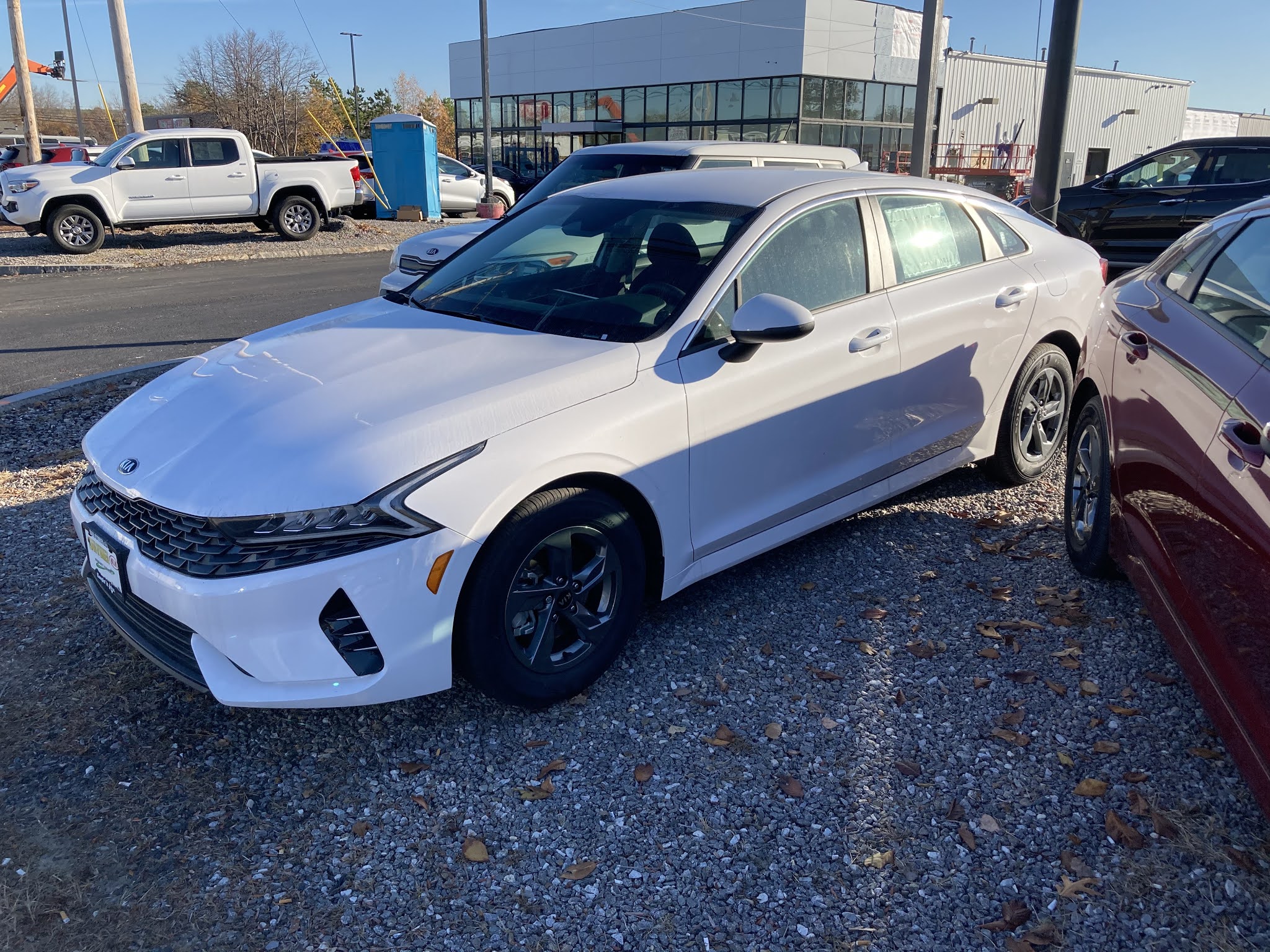
Kia K5

The Kia K5 improves upon all aspects of the Optima it replaces by leaps and bounds. Knockout exterior design and a completely overhauled interior move Kia's midsize sedan game up a level considerably. In a clever advertising campaign, Kia calls out other manufacturers for killing off their sedans while Kia "turbocharges ahead." The sedan market isn't dead yet, and Kia is determined to attract sedan shoppers to its dealers with the all new K5. Be on the lookout for the 290 hp, all-wheel drive GT out soon.


Kia Niro

How do you make sure your hybrid/electric vehicle doesn't suffer from any packaging compromises or performance issues that come from fitting extra batteries inside the car? The answer is you design a vehicle from the outset to accommodate the necessary electric hardware. While on the small side of the crossover spectrum, there is plenty of room in the Niro for a family of four and their cargo. If you have never driven a hybrid or electric vehicle before, the silent operation of the motor may be a bit disconcerting. The Niro can be pricy, but a combined fuel economy rating of 49 miles per gallon can result in significant savings at the pump.


Kia Rio

Don't let the Rio's low price, and admittedly chintzy ancestors fool you. The current generation Rio subcompact sedan and hatchback exceed their humble mission brief to deliver a classy and sophisticated experience with a smart layout and pleasing materials. 120 hp isn't much, but it is plenty adequate to move the Rio along at normal speeds. Ride and handling are also impressive for such a small car. The hatchback model adds more cargo space and slightly more passenger volume, making it the ideal choice.


Kia Seltos

The first ever Kia Seltos had an important job upon its introduction for the 2021 model year. It effectively splits the difference between the subcompact Soul and the compact Sportage by pairing tidy exterior dimensions and robust all-wheel drive with enough style and personality to stand on its own. The Seltos feels big on the inside and material quality is superb. Seltos buyers should never leave the showroom feeling shortchanged. Confident handling and aforementioned all-wheel drive should make the Seltos a hit here in New England.


Kia Sorento

Life for the Kia Sorento hasn't been easy. Forced to pull the brand along following the spectacular sales failure of the Borrego, the Sorento now finds itself regularly upstaged by its newer big brother, the Telluride. Despite this, the Sorento makes sense as a family vehicle in the ultra-competitive midsize crossover market. The interior layout is simple and straightforward with upper trim levels adding noticeable luxurious elements to class up the cabin. Acceleration is strong, and the vehicle rides comfortably enough to make long trips a breeze. A third row of seats comes standard, but should only really be used in emergencies. The Sorento functions much better as a two-row SUV with the third row folded flat to maximize cargo space.


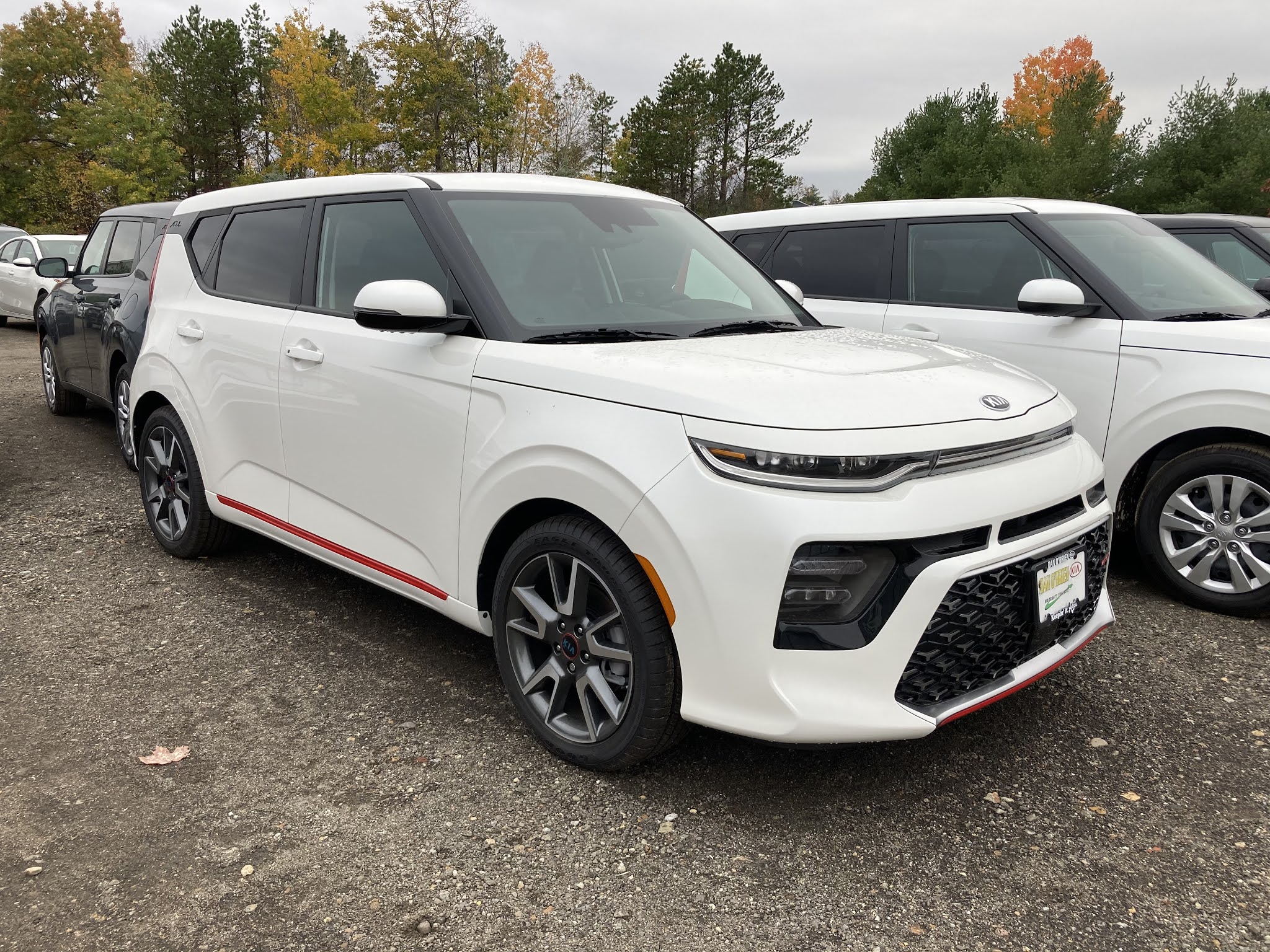
Kia Soul

One of my personal favorite cars in the Kia lineup, the Soul's balance of style, practicality, and affordability is hard to beat. It manages the rare feat of being cheap without looking or feeling cheap. The fact that the Soul is popular with people ranging in age from 17 to 77 speaks volumes to its versatility and ease of use. True, it doesn't come with all-wheel drive, but the Soul's engaging handling and a set of proper tires should get the Soul out of most trouble spots.


Kia Sportage

The Kia Sportage holds the distinction of being one of the brand's oldest nameplates in North America, first debuting back in 1993. The vehicle has gone through quite a metamorphosis since then. There was a time when you could buy a three-door Sportage with a convertible roof! Now, the Sportage is a lynchpin to Kia's SUV lineup, and impressed me with its intuitive interior layout, comfy seats, and optional turbocharged engine. Although the current model is getting a bit long in the tooth, it continues to hold its own against the competition.


Kia Stinger

It's rather unfortunate that the Kia Stinger has fallen off the radar as of late. Sales have slowed considerably, and there are questions as to whether the Stinger will live to see a second generation. The loss of the Stinger would be a heavy blow to Kia as well as the entire automotive industry. The halo cast by the Stinger has imbued several of Kia's models with greater degrees of sportiness. With a base price that undercuts similar models from Audi and BMW by several thousand dollars, and performance figures that keep the Germans within reach, the Stinger makes for a compelling performance sedan. When you enter a Stinger, you immediately know that you are getting inside something special. A flat-bottomed steering wheel, deeply bolstered seats, and a distinctive T-shaped shift lever communicate that this car means business. Rear legroom is generous, even though outward rear visibility isn't the best. It even comes with a hatchback, making loading things into the trunk a breeze. Don't let your significant other talk you out of getting a Stinger. Just mention all the practical benefits as well as the Stinger's 365 hp, twin-turbo V6.


Kia Telluride

2020 North American Utility Vehicle of the Year. 2020 Motor Trend SUV of the Year. 2020 World Car of the Year. And now a two-time Car and Driver 10 Best award winner. Does the Kia Telluride lives up to the hype? Yes it does. Forget the K900. That car is a unicorn for the couple hundred people who know or care that it exists. The Telluride is the true flagship of the Kia brand. If you are looking for a new family vehicle, there are not many better choices out there than a Telluride. It's outer appearance is unlike anything else on the market, and the Nightfall Edition package, such as on the Telluride in the photo above, adds an appropriate level of menace to the vehicle. Build quality and materials are top notch and there are plenty of comfort, convenience, and safety features included regardless of trim level. Unlike the Sorento, the Telluride's third row is spacious, and can be enjoyed by children and adults. On the road, the Telluride drives smoothly, with the 291 hp V6 engine never feeling like it is struggling to move the car along. Loaded SX Tellurides top out just below $50,000, a relative bargain for the level of luxury you get. Car and Driver even jokes that people interested in the Telluride should buy one now before Kia realizes how good its car is and raises the price accordingly.

Sunday, November 22, 2020

Toy Story at 25


Moviegoers on November 22, 1995 had no idea what they were in for when they lined up to see Toy Story for the first time. They were going to be the first people in the world to see a feature length animated film made entirely on computers. Leading up to Toy Story's release, executives at both Walt Disney Animation Studios and Pixar Animation Studios were nervous about how people would respond to a film unlike anything that had been produced before.

Earlier in 1995, Casper marked a cinematic milestone by featuring the first fully CGI character in a lead role. But Toy Story was going to be different. Not only were all of the characters CGI, their entire world would be created solely through the use of computer based animation. 

For Disney, a company that pioneered and mastered the art of traditional hand-drawn animation, Toy Story was a bold step in a new direction. For Pixar, a young animation company with roots in Lucasfilm's Computer Division before being purchased and spun off as an independent company by Steve Jobs in 1986, the film was a chance to prove that the technology they used to produce 3-D animated short films and TV commercials had reached a level of maturity capable of handling the processing power to create a full length movie.

As it turned out, no one should have worried. Toy Story opened at #1 that weekend and went on to become the highest grossing animated film of the year with a worldwide total of $362 million. The film was later recognized with Academy Award nominations for Best Original Song, Best Original Score, and Best Original Screenplay. It was the first time an animated film of any sort had been recognized for screenwriting. Director John Lasseter also won a special Oscar for the technical achievement Toy Story represented.

The success of Toy Story sent shockwaves through the movie industry, forever changing the way animated movies were made. By the end of the next decade, nearly all animation studios, including Disney, had switched to full CGI to produce their films. The benefits of animating solely on computers are tremendous. Up to this point, animated films were basically gigantic flip books - series of individual frames one after the other with everything having to be redrawn for each successive frame. Static elements like backgrounds could be carried over, but anything that changed shape had to be adjusted even if the changes were miniscule. With a computer, all elements of a scene - characters, background elements, props, etc. - are stored as separate assets, and can be replicated infinitely without any loss of quality.

This is particularly beneficial for franchise building if the studio wishes to spin off its movie characters into sequels, television shows, or video games. Take for example the 2001 animated film, Jimmy Neutron: Boy Genius. Originally, Nickelodeon envisioned Jimmy Neutron as a TV series with an accompanying theatrical movie later down the road, but series creator, John A. Davis, suggested that the film be made first, so that the development team could create all assets at theatrical quality, and then reuse them for the TV series. The Jimmy Neutron TV series could then be made relatively cheaply since everything was pretty much already in place.

Toy Story also furthered the burgeoning trend of getting A-list celebrities to lend their voices to animated projects. Disney films of the 1990s were slowly beginning to feature well-known actors in voice over roles, the most famous of which being Robin Williams as the Genie in 1992's Aladdin. But Toy Story raised the bar by featuring a cast made up almost entirely of celebrity performers and character actors whose voices were immediately recognizable to adult viewers. Even so, there was still a stigma among actors about not being able to show their faces in a movie role. Tom Hanks only signed up for his now iconic role as Woody after seeing some animation synced to his voice from Turner & Hooch. Tim Allen on the other hand signed on instantly for the role of Buzz Lightyear. Allen was approached after Pixar's first choice, Billy Crystal, dubious of the potential of the project declined to participate, a decision he later regretted. Crystal would later take on the role of Mike Wazowski in Pixar's 2001 film Monsters, Inc.

But perhaps Toy Story's greatest achievement was establishing a blueprint that all Pixar films since have stuck to, putting the story first. While audiences were undoubtedly wowed by the impressive technology behind the film, it was the story of Woody and Buzz learning to work together and make their way back home to their owner, Andy, that kept audiences coming back for more. Future Pixar films continued this theme. By not talking down to children, but instead talking up to adults, the people at Pixar created movies that the whole family could enjoy. 

Moviegoers certainly lined up to support Pixar, with Pixar films outgrossing Disney animated films on a regular basis. Realizing Pixar's prowess at filmmaking, Disney purchased the animation studio outright in 2006 for $7.4 billion in 2006 and installed Steve Lasseter as Chief Creative Officer. Even so, it would take until the release of Frozen in 2013 for a Walt Disney Animation Studios film to earn more money than a Pixar film released the same year. It is also worth noting that Toy Story 3 released in 2010 became the first animated film to gross more than a billion dollars worldwide.

Twenty five years later, the effects of Toy Story continue to be felt throughout the movie industry. Constant advances in computer technology make it easier than ever to produce animated movies with incredible attention to detail. Voicing an animated character is no longer something to be ashamed of, but rather a prestigious addition to an actor's resume. And animated movies no longer just exist in the realms of children's entertainment, they can be enjoyed and beloved by adults as well.

Happy Anniversary, Toy Story!  

Wednesday, October 21, 2020

Jaguar Prunes Lineup Amid a Changing Luxury Landscape

The business of selling luxury cars isn't what it used to be. Customers are no longer expected to leave dealerships in big, V8-powered sedans. Nowadays crossovers and SUVs reign supreme, and there is a growing expectation that they will be powered, at least in part, by electricity.

Some carmakers have already adjusted for this new reality. Buick and Lincoln are now SUV-only brands for the first time in their history. Volvo has promised that half of the vehicles it produces will be fully electric by 2025. Mercedes-Benz is staying busy adding new models to its EQ electric subbrand.

Jaguar is in the midst of carrying out its own plans for the future. For 2021, the British luxury brand has dropped the XE sedan and the XF Sportbrake - Jaguar-speak for wagon - from its US lineup. The XF sedan continues on with a reshaped front end and a significantly updated interior. Base prices drop by $7,105 to help mitigate the loss of the entry level XE, and all XFs will be powered by a turbocharged 2.0-liter, four-cylinder engine making either 246 or 296 horsepower. The XF is also Jaguar's last sedan standing, at least until a new, all-electric XJ arrives. It joins the E-Pace, F-Pace, and I-Pace SUVs, as well as the F-type sports car.

Jaguar has never been a major player in the American market. Annual sales have been around 30,000 units for the last two years. For comparison, that's about the number of cars BMW sells in a month. In the midst of the COVID-19 pandemic, Jaguar has sold a little over 16,000 cars according to data compiled by GoodCarBadCar. Of that total, the F-Pace accounts for 7,891 vehicles.

Both the XE and the XF Sportbrake have been slow sellers, so cutting them from the lineup makes sense as way to reign in expenses. Only 3,551 XEs found homes last year, and less than 250 Sportbrakes have been sold over the course of three years according to Road and Track. Jaguar's sister brand, Land Rover, has sold 52,335 cars so far this year, further accentuating the shift in consumer preference toward SUVs.

With so little market share, positioning itself as a sporty, electric alternative to mainstream luxury vehicles appears to be Jaguar's best bet. However it must act quickly. As mentioned above, Mercedes and Volvo are steaming ahead to an electric future, and Audi and Porsche have also released their first all-electric model lines. Jaguar needs to capitalize on its core strengths: distinctive design, motorsports heritage, and wholesome British charm to keep loyal buyers coming into its showrooms and attract curious new prospects to the brand.

Sunday, September 13, 2020

New Grand Wagoneer Pushes Jeep Further Upmarket


Hard to believe, but Jeep has been without a three-row vehicle in its lineup since it discontinued the Commander back in 2010. That will soon change with the arrival of the Jeep Grand Wagoneer next summer.

Sitting on the same body on frame platform as the Ram 1500, the Grand Wagoneer debuted on September 3 as a near production ready concept. Dimensions and powertrain specifications were not announced, but it seems likely that V-6 and V-8 gas engines, a plug-in hybrid setup, and quite possibly a diesel engine will be offered. Standard four wheel drive is a given. In fact buyers will be able to choose between three 4x4 systems. Both short and long wheelbase versions will be built. Lower content versions will be called Wagoneer, while the Grand Wagoneer name will be used on the upper trim levels. 

With prices expected to span from $60,000 to over $100,000, the Wagoneer / Grand Wagoneer goes toe-to-toe with a full spectrum of competitors from the Chevrolet Tahoe and Ford Expedition to the Mercedes-Benz GLS and the Land Rover Range Rover. As such, the Grand Wagoneer is equipped with plenty of wood, leather, and screens to satisfy the modern luxury SUV buyer.


During the introductory presentation, Jeep President, Christian Meunier, stressed how the Grand Wagoneer is a different kind of Jeep.

"The Jeep customer," said Meunier, "loves travelling, camping, and fishing. The Wagoneer driver would rather go golfing on the finest courses or cruising on their sailboat. If Jeep was a house, it would be a cabin in the woods. The Wagoneer, a glass house on the ocean. In our vision, Wagoneer will become a portfolio of SUVs that will redefine American premium and deliver a unique customer experience."


Ralph Gilles, Fiat Chrysler Automobile's Head of Design, echoed this sentiment. "We look at what Jeep means to most people. A Jeep, of course, has this incredible overtone of adventure. And we look at what Wagoneer can mean and it's the same idea but executed in a much more artisanal way."

Gilles likened other Jeep models to rugged hiking backpacks, while the Wagoneer is more akin to a luxurious designer backpack. It certainly looks the part with plentiful chrome trim, 24-inch wheels, backlit badging on the front and rear of the car, and LED lights front and rear which also run between each of seven slots of the signature front grille.


With the on sale date of the Grand Wagoneer almost a year away, there is still plenty of time for car buyers to decide whether a $60K+ three-row Jeep is the right car for them. Jeep owners are among the most passionate and loyal people out there when it comes to supporting their brand, so current owners looking for a larger car will certainly be excited.

And if the notion of spending close to six figures on a Jeep seems strange, you may not have noticed that Jeep vehicles have been climbing steadily in price for several years now. It is not uncommon to spend more than $50,000 on a new Wrangler or a Gladiator. Even a fully loaded Renegade can crest $30,000. The Jeep Grand Cherokee Trackhawk with its legendary 707 horsepower, 6.2 liter Hellcat V-8 already comes close to $100,000. When people pay for a Jeep, they are also paying for membership into an exclusive way of life. Jeep is betting big that the Wagoneer and the Grand Wagoneer will provide owners with a distinctly American luxury experience no other domestic or foreign SUV can match.