Sunday, November 20, 2016

Corvette Who? - 2017 Camaro ZL1 Catches Up with its Big Brother


Sibling rivalry within an automaker's lineup is a sticky business.  Engineers try their best to keep a stable hierarchy in place.  However, particularly among sports cars, sometimes an insurrection against the status quo breaks out.  Chevrolet has tried to be a generous parent over the years.  The Camaro has traditionally been the recipient of hand-me-downs from its big brother, the Corvette.  For the sixth generation Camaro, enthusiasts have been eager to see what surprises await now that it has been on sale for a little over a year.

The Camaro SS has already received praise for its blistering performance at a relatively affordable price.  It can also become a serious supercar slayer when equipped with the 1LE package, as demonstrated at Car and Driver's latest Lightning Lap event.  That car was faster around Virginia International Raceway than several more expensive cars including the 2017 Audi R8 and the 2012 Lexus LFA.  Many factors contribute to this extraordinary feat, including a switch to the lighter Alpha chassis and an engine shared with the Corvette Stingray.  Now, Chevy has provided the Camaro with additional firepower in the form of the 2017 Camaro ZL1.

The ZL1 is powered by the exact same engine found in the Corvette Z06.  It makes a square 650 horsepower and 650 lb-ft of torque.  The only difference is a conventional oil pan instead of the dry sump lubrication setup used in the Corvette.  Aside from that, many other Z06 performance features are present.  The ZL1 has magnetorheological dampers, an electronic limited-slip differential, and GM's Performance Traction Management system.  To provide sufficient air to the engine, the front radiators have grown to almost ludicrous proportions.  The new ZL1 also employs the hollowed-out "flow tie" first seen in the last generation Z/28.

A six-speed manual transmission is standard, and a new ten-speed automatic developed in conjunction with Ford is optional.  Chevy says that the automatic's 7.39 overall ratio spread will help optimize gear selection for acceleration and when exiting corners.

At a starting price of around $62,000 when it goes on sale at the end of this year, the Camaro ZL1 is priced in prime Corvette territory.  It makes a compelling option for those who want Z06 power without the $100,000 sticker that car commands.  Sure you'd have to put up with some of the Camaro's shortcomings, such as a fairly pedestrian interior and limited outward visibility, but for some the sacrifices will be worth it.

Chevrolet has established a system in which the Corvette receives first crack at new technologies and more powerful engines.  Then the Camaro gets its turn to play.  To stay ahead, the Corvette will receive a ZR1 upgrade in 2018 with an estimated 700 horsepower.  Perhaps we can expect the next Camaro Z/28 to keep the friendly sibling rivalry going when it appears shortly thereafter.

Friday, November 11, 2016

Pokemon Genesect Mythical Collection Box Opening

Hello.  This is the first video I have uploaded to this blog.  I thought I would give it a try and see if people enjoy seeing me do something different.  As you might have guessed from the name of this blog, I am a big fan of collecting Pokémon cards.  I've pondered over how I can share that passion on this blog much like the PokeTubers on YouTube do.  I don't have the resources or the equipment to compare with them, but I will do my best with what I have.  I hope you enjoy the video, and I'll make some more as new trading card products are released.


Monday, October 31, 2016

Scooby Doo on Zombie Island Review

Happy Halloween everyone!  To celebrate, I am going to review one of the scariest cartoons I remember watching when I was younger.  That honor goes to the direct to video movie Scooby-Doo on Zombie Island.  This movie came out in 1998 and is credited for renewing interest in the Scooby-Doo franchise.  It paved the way for several new Scooby-Doo series, some live action movies, and a TV movie every year since.

This was the first Scooby-Doo production to not have Casey Kasem as the voice of Shaggy.  Kasem refused to voice Shaggy unless Shaggy was characterized as a vegetarian like he was.  In fact, Frank Welker was the only actor from the original series to reprise his role for this movie.  The original voice actor for Scooby, Don Messick, died nearly a year before the movie's release.  A dedication to Messick appears in the credits.

The movie is meant as a follow up to the original 1969 TV series.  The gang is slightly older, and they have gone their separate ways.  Fred and Daphne have their own television series, Velma owns a mystery bookstore, and Shaggy and Scooby bounce from job to job.  To celebrate Daphne's birthday, Fred organizes the gang to reunite and accompany him and Daphne while they are filming new haunted house segments for their show. 

The gang eventually arrives in New Orleans after a series of disappointing adventures where the monsters they encounter always end up being people in costumes.  They receive an invitation by a young woman named Lena to accompany her to her employer's mansion on Moonscar Island, which she says is haunted by the ghost of the pirate, Morgan Moonscar.  Soon, ghosts and zombies appear all over the place.  Everyone tries to come up with a logical explanation for what they are seeing based on their previous experiences with supposed supernatural beings.  However, as the movie goes on, they are forced to accept the horrifying truth: these monsters are real.

Scooby-Doo on Zombie Island is a significant departure from the original series.  It is much darker, which is due in part to the fact that the zombies are depicted as being real.  Scenes of death also appear throughout the movie.  The animators and sound designers didn't try to make the zombies less frightening either.  One terrifying scene in particular shows Scooby and Shaggy encountering a skeleton which grows skin, hair, and clothes to become a zombie.  A supernatural light causes other zombies to emerge from the depths of the bayou.  While trying to "unmask" one of the zombies, Fred accidentally pulls its entire head off, and the gang toss it around in terror.

Rotten Tomatoes gave Scooby-Doo on Zombie Island a rating of 88%.  Critics and viewers praised the voice acting, the animation, and the story's originality.  I remember when I first saw this movie, I was still scared for over a week afterwards.  Now that I am older, I can appreciate the good aspects of this movie.  It still ranks among the best Scooby-Doo movies I've seen.  Characterization is strong, and the surprise twist in the story is expertly done.

Scary imagery aside, the music for this movie totally rocks.  Two songs that play during the movie, "The Ghost is Here" and "It's Terror Time Again," were performed by the Los Angeles based rock band Skycycle.  The "Scooby-Doo, Where Are You!" title track was performed by Third Eye Blind. 

I would recommend this movie to children aged 10 and up.  Anyone younger might get too scared while watching it.  Please believe me when I say that I can attest to this.  For those who can handle the terrifying imagery, it is a great movie to watch with family and friends during Halloween.

Saturday, October 1, 2016

Say Hello to Genesis


Genesis G80
We all saw this coming.  Hyundai has finally realized its desire to offer a full line of luxury vehicles with the introduction of the Genesis brand.  It is pleasing to see how Hyundai has marched forward with this plan over the better part of the last decade to the point where most people do not raise their eyebrows at a Korean luxury car.  Anyone can throw some leather and wood in a car and call it luxurious, but it takes more than that to win over the opinion of the public who will ultimately purchase and support the product.  To that end, some major credit must be given to the marketing team, management, and engineers who made this possible.
 
 Hyundai began its climb up the luxury ladder in 2009 with the Genesis sedan.  It was positioned as more luxurious and sporting than the ho-hum Azera.  With rear wheel drive and an available V8 engine, plus Hyundai’s excellent warranty, the Genesis offered buyers a cheaper alternative to other entry level luxury sedans.  It scored favorably in comparison tests, and stayed in production until 2015 when it was replaced with a second generation model.

 The next Genesis featured noticeable improvements in design and performance.  Although the interior was still not quite up to the level of fit and finish seen in Audi, Lexus, or Mercedes, it was attractive and befitting of a $40,000 car.  More importantly, Hyundai worked diligently to address criticisms of the first car’s ride and handling.  To do this, Hyundai partnered with Lotus to sort out deficiencies with the car’s anti-roll bars, springs, dampers, steering calibration, and engine mounts.  A stiffer structure also helped contribute to a better sorted suspension.  Initial tests praised the 2015 Genesis’s steering as attentive and well-weighted; and its ride comfortable over rough roads.

 The second model of Hyundai’s luxury product assault was the Equus, a full size luxury limo.  It debuted in 2010 as a 2011 model.  Using the same platform as the Genesis, the Equus was sized and equipped to compete with the venerable Mercedes-Benz S-Class, Lexus LS, and Audi A8.  To differentiate itself from other cars, the Equus came with a unique ownership experience known as “Your Time, Your Place.”  An industry first interactive owner’s manual app provides a convenient and simple way for owners to become familiar with the vehicle’s capabilities.  Maintenance is completely free for three years or 36,000 miles.  When service is required, owners can schedule an appointment online, and can even have their vehicle picked up for them with a complementary loaner left in its place.  Once maintenance is completed, the owner chooses the time and place for their vehicle to be delivered.  Hyundai has introduced this program to all Genesis models, and it is likely other luxury brands will offer similar programs. 

Now in 2016, the Hyundai Genesis has become the 2017 Genesis G80, andis essentially the same as last year's model.  A few more optional equipment items are now standard such as lane keeping assist, adaptive cruise control, automatic braking, and blind spot detection.  Prices start around $40,000 for a V6 car and $54,000 for the V8. 

 The Genesis G90 is the successor to the Equus and benefits from a comprehensive refresh.  Much like the second generation Genesis, the new G90’s ride, build quality, and technology have been improved upon.  Pricing for the G90 should undercut the competition at around $70,000.  The G90 also has standard equipment items that are pricey options on German cars, further enhancing its value.

 For the time being, Genesis cars will be sold out of Hyundai dealerships, although the plan is for them to eventually have their own showrooms.  More models will be added to the lineup in due time, including a couple SUVs, a smaller sedan, and a coupe.  The big question remains though whether Hyundai's multibillion dollar investment in the Genesis brand will be worth it.

Hyundai likens Genesis as a Lexus for a new era.  Remember, Lexus was created by Toyota to take on the best of Europe at a more affordable price.  However, Lexus's real advantage was its superior build quality compared to its competitors.  The original Lexus LS shook the luxury market to the core with its hair thin panel gaps and bullet proof Toyota reliability.

 It will take years to see how much market share Genesis gains, but it can be expected that the new brand will build a healthy following for its value proposition and personalized ownership experience.  Hyundai has also demonstrated that it learns from past errors and continually works to improve its cars to stay in line with customer expectations.  Such diligence is admirable and can only be rewarded with success.

Saturday, September 10, 2016

The Importance of Value

This blog post is going to cover a variety of topics, including cars, cards, and something else.  What I am going to do is share my thoughts on what it means to ascribe value to something.  How much is something truly worth?  Can the monetary value of something completely encapsulate its real value?

The thing that got me thinking about all this was a Lego magazine I received in the mail.  In addition to cars, cards, and cartoons, I am a big Lego fan.  The Star Wars line is undoubtedly my favorite.  When I was younger I enjoyed reenacting scenes from the movies and coming up with my own stories.  For example, what if the Empire decided to conquer the Throwbots?  Would the Insectoids align with the Separatists?  I used to play Legos with my sister, who has a lot of Harry Potter sets.  I would send my AT-ST to attack her Hogwarts, and things like that.

I haven't bought a Lego Star Wars set for some time now.  Part of the reason is that the sets and the figures have become so intricately detailed, they would clash horribly with the sets I already have.  The other reason is because Lego sets have become so darn expensive.  The magazine I just got features an X-Wing Starfighter for $79.99.  I have the original 1999 X-Wing, which retailed for only $30.  True, my X-Wing looks pretty flimsy compared to the new one, but it still gets the job done.

I know that Lego bleats continuously that they strive to maintain a 10 cent price per part ratio for all their products, and have been doing so even for the older sets.  I guess that makes sense on some level, but at the same time I can't help thinking that the finished product should have some factor in determining the value of the set.  For example, one of my most prized Lego Star Wars sets is the Ultimate Space Battle set #7283.  It includes a total of five ships and retailed for a price of $50 back in 2005.  I don't think Lego is capable of making something like that today.  To build the modern equivalent of this set, you would have to spend at least twice that. 

Today the Ultimate Space Battle sells online for around $300.  For the amount of enjoyment I got from it, I would go so far to call it a bargain in its day.  I truly feel sorry for kids nowadays.  I couldn't possibly buy all my Lego sets again if I had to.  My birthday and Christmas lists would have to be nickel and dimed to make sure everything on it is worth it.

The same value argument applies for cars.  Spending more money on a car used to mean that you were getting convenience and luxury items unavailable in cheaper cars.  August 2016 average car transaction prices were at a record high as consumers chose larger vehicles with more safety and convenience features.  However, there are still some cars whose lists of standard equipment have some glaring shortcomings considering the price.  In a comparison test between a $46,000 Chevrolet Camaro and a $81,000 BMW M4, Motor Trend concluded that the Camaro is not only a performance equal to the M4, it trumps the BMW in features and amenities.  The Camaro came equipped with features such as a backup camera, heated seats, and satellite radio.  To add those options on the BMW would lift its MSRP even higher. 

A new Audi A8 which starts at around $81,000 doesn't have a single USB port.  My mom's $15,000 Honda Fit has a USB port.  Another example of not getting what you pay for is the Rolls-Royce Dawn.  One model tested by Car and Driver lacked onboard WiFi and Apple CarPlay capabilities.  I understand that not everyone needs WiFi wherever they go, but you would think something like that would be standard equipment for a car that costs over $400,000.

At the end of the day, an object's value is determined more by how much it means to you than it does the monetary number assigned to it.  Whether it be a car, a trading card, or a toy, your connection to the object can overcome the number following the dollar sign attached to it.  Big purchases should not be taken lightly, and people should not assume that just because something is more expensive means it is that much better.  The feel good factor you receive from the object of your desire goes a long way in determining your long term satisfaction with owning it.

Wednesday, August 3, 2016

The End of the Ute

On July 29, the last Ford Falcon Ute left Ford's Broadmeadow plant outside of Melbourne, Australia.  Ford is scheduled to end all vehicle production in Australia by September of this year.  General Motors and Toyota have also made plans to end Australian production by the end of 2017.  Henceforth, all vehicles sold by these brands in Australia will be imported from elsewhere.  The strength of the Australian dollar and increasing production costs are major factors behind the decision to cease local production of automobiles.  Other factors include changing consumer tastes toward cheaper imported vehicles.  Ford has seen sales of its Falcon dwindle from a high of 81,000 in 1995 to around 14,036 in 2013, and has observed customers looking for a practical workhorse purchase its Thailand-built Ranger pickup truck.

The history of the ute dates back to 1932, when a wife of a farmer in Victoria, Australia wrote a letter to Ford asking them to build a vehicle "to go to church in on Sunday, and which can carry our pigs to market on Mondays."  Ford obliged the woman's request, and it was the beginning of a long standing tradition of Australian-designed and built coupe utility vehicles.  The current Ford Falcon Ute can tow up to 5,000 lbs when properly equipped, and has a payload of up to one ton.  All the while, it offers its passengers a smooth car-like ride.  General Motors' Holden division developed its first ute in 1951, and continues to build one based off the Holden Commodore sedan.

Ford and General Motors brought the ute to America in the late 1950s.  The Ford Ranchero was derived from different Ford sedans over the course of its lifetime, and stayed in production until 1979.  The Chevrolet El Camino was born in response to the Ranchero and outlasted its competitor until 1987.  Government restrictions and increasing production costs made car-based utility vehicles more unattractive from a manufacturing standpoint.  While American utes faded into obscurity, they thrived in Australia.  Each generation brought increases in refinement and capability.  High performance variants generated numbers to embarrass many a sports car, including the 435 horsepower Holden HSV Maloo and the 422 horsepower Ford FPV Pursuit. 

The end of Australian manufacturing and the ute are sad news for many in the automotive community.  Much like Australia is a refuge for unique indigenous wildlife, so it has become a bastion of cars that have, for the most part, gone extinct elsewhere around the world.  The Ford Falcon and the Holden Commodore are among the last mainstream family sedans and coupe utility vehicles to offer rear wheel drive and a V8 powertrain as an option.  They are also as important cultural icons to Australia as are kangaroos and koalas.  The emotional connection and overwhelming passion Ford and Holden fans felt for these homegrown cars is unlikely to be replicated with any imported models from either company's portfolio. 

It is difficult for car manufacturers today to distribute their resources between cars they want to build and cars they need to build.  Does Acura really need the NSX?  Does Chevrolet need the Corvette?  Some would say yes to those questions.  These cars serve as showpieces for their brand that cast their aura across the rest of the lineup.  Sometimes it works and sometimes it doesn't.  The Dodge Viper is about to end production after failing spectacularly with the buying public.  Cars brimming with passion still need to make some contribution to the bottom line in addition to creating a halo for the brand.  It is unfortunate that the Australian ute will soon be leaving us.  Australia and the rest of the world will not be the same without it.

Thursday, July 7, 2016

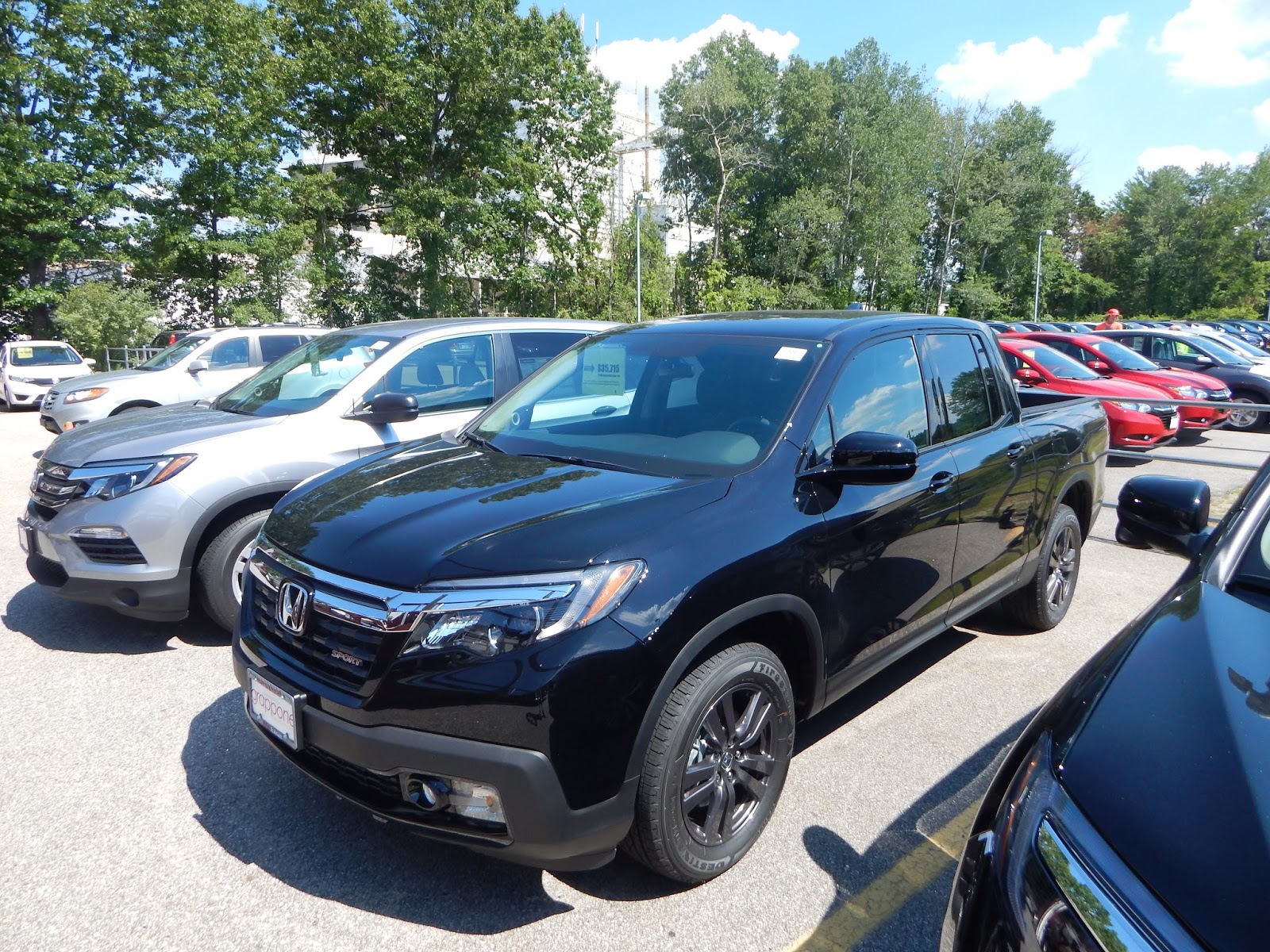
Cars: 2017 Honda Ridgeline

After a two year hiatus, the Honda Ridgeline is back and better than ever.  The second generation Ridgeline rides on a completely new platform and has been redesigned inside and out to do battle with established heavyweights such as the Toyota Tacoma, Nissan Frontier, Chevrolet Colorado, and GMC Canyon. 

Honda positions the Ridgeline as a utility vehicle for those who do not need the capabilities of a full size pickup, and would like a comfortable ride.  To that end, the new Ridgeline continues to share its unit body underpinnings with the Honda Pilot crossover.  The original Ridgeline received criticism from some truck buyers for not being a real truck.  They say real trucks are built using body on frame construction to maximize towing ability. 

Although the Ridgeline lags its competitors in terms of towing capability, it offers a much better ride for its passengers and gets superior fuel mileage.  Honda quotes fuel economy at 18 mpg city, 25 highway, and a combined rating of 21 mpg for all wheel drive models.  Towing capacity is rated at 3,500 pounds for front wheel drive Ridgelines and 5,000 pounds for all wheel drive Ridgelines.  For comparison, the base four cylinder Tacoma can pull 3,500 pounds and is capable of towing as much as 6,800 pounds with the optional tow package.  The bed of the Ridgeline has grown four inches longer and can comfortably hold 4x8 sheets of plywood or a couple of motorcycles.  Payload is quoted at 1,584 pounds, among the best in the segment.     

Novel features include a tailgate that can swing out as well as down for versatility while loading the bed.  There is also a handy in bed storage compartment capable of carrying an additional 7.3 cubic feet of cargo.  Inside, the rear seats split 60/40, and can lift up to make room for groceries and even a bike.  A new feature for this generation is an in-bed audio system that uses speakers mounted behind the bed lining to play music.  An outlet in the bed allows hookup for a television or power tools. 

Of course, the Ridgeline comes equipped with Honda's latest safety and convenience technology.  Apple CarPlay and Android Auto are standard on higher tier models, as is HondaLink, which can stream music, access social media, and even make it easy to schedule service appointments.  A rearview camera is standard on all models, and other driving aids such as blind spot monitoring systems and lane keeping assist are part of the Honda Sensing package.

The Ridgeline does start on the expensive side of midsize pickups with an MSRP of around $29,475.  However, keep in mind that the Ridgeline is only offered with a 280 hp V6 engine.  Apples to apples, the Ridgeline is priced competitively with comparable models, and offers several class exclusive features that should entice prospective buyers.  Honda did its research when developing the Ridgeline, and built a truck that will suit the majority of people's lifestyles.

Back in 2005 when the first Ridgeline debuted, it was heralded as the right truck at the right time as gas prices started to climb.  Prices are lower now, but fuel economy remains a priority in the truck industry.  Ford has already made strides in weight reduction and fuel efficiency by offering a turbocharged V6 and aluminum bodywork on its best selling F-150.  With the innovative new Ridgeline, Honda stands to gain a healthy market share of those looking for a fuel efficient, comfortable riding, and versatile midsize pickup.